If you’ve walked down the lighting aisle recently, you’ve faced a classic dilemma: stick with the familiar warmth of incandescent bulbs or make the switch to modern LED technology?
For decades, incandescent bulbs were the only practical choice for porches, gardens, and driveways. They were cheap to buy and produced a cozy, familiar glow. Then came LEDs—lasting—promising to revolutionize outdoor illumination.
Table of Contents
Advantages of Incandescent Lighting Outdoors
Before we crown a winner, it’s only fair to give incandescent bulbs their due. While they’ve largely been phased out for indoor general lighting, they still offer a few distinct benefits for outdoor applications—especially in niche scenarios.
Superior Color Rendering
Incandescent bulbs have a Color Rendering Index (CRI) of 100—the maximum possible. That means they render colors exactly as they appear under natural sunlight. Most budget LEDs hover around 80–85 CRI, and even premium LEDs rarely exceed 95.
Low Initial Sourcing Costs
On a unit-by-unit basis, traditional incandescent bulbs are incredibly inexpensive to manufacture and purchase upfront. For projects facing severe immediate budget constraints, the initial acquisition cost is significantly lower than that of advanced LED systems.
Simplified Circuitry
Incandescent lamps are simple resistive loads. They do not require external drivers, ballast systems, or specialized electronic components to function. They are natively dimmable with basic, inexpensive control systems, making initial installation straightforward for standard electrical setups.
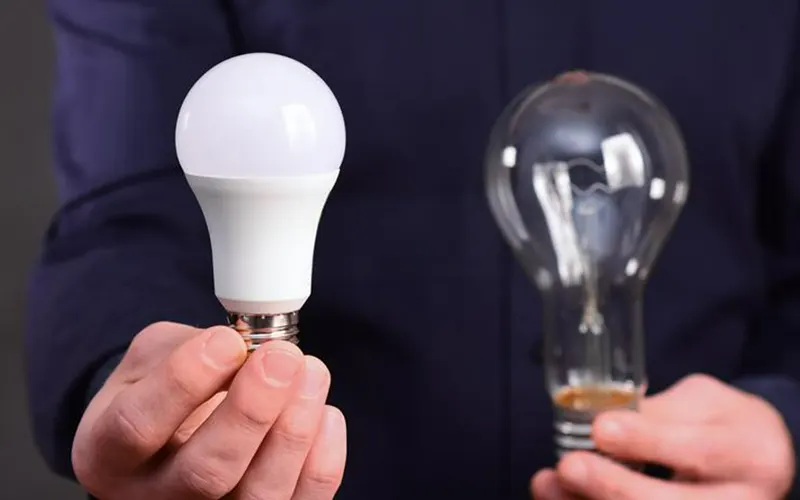
LED vs Incandescent Lighting: Energy Efficiency Comparison
The fundamental flaw of incandescent technology lies in its physics. Because it relies on heat to generate light, an incandescent bulb converts roughly 90% of its consumed electrical energy into wasted thermal energy (heat), leaving only 10% to be emitted as visible light. This inefficiency results in a very low luminous efficacy, typically averaging just 10 to 17 lumens per watt (lm/W).
| Metric | Incandescent Bulbs | Commercial LED Lighting |
| Luminous Efficacy | 10 – 17 lm/W | 100 – 150+ lm/W |
| Energy Conversion | 10% Light / 90% Heat | 80% Light / 20% Heat |
| Average Wattage for 800 lm | 60 Watts | 6 – 9 Watts |
In contrast, LEDs (light-emitting diodes) are solid-state semiconductors. When an electrical current passes through the diode, it excites electrons, releasing energy directly in the form of photons through electroluminescence. This highly optimized process allows modern commercial LEDs to easily achieve efficiencies of 100 to 150+ lm/W.
For a large-scale outdoor project running multiple fixtures through the night, switching to LED reduces power consumption by up to 80% to 85%. Over months and years of continuous nighttime operation, this dramatic drop in wattage scales down commercial utility bills.
Which Outdoor Lighting Option Lasts Longer?
For outdoor infrastructure, maintenance logistics are often more expensive than the hardware itself. Replacing a burned-out bulb in a vaulted exterior breezeway, a high-mast parking lot fixture, or a submerged landscape system requires specialized labor, safety protocols, and occasionally heavy machinery like bucket trucks.
Incandescent bulbs are highly volatile components. The continuous heating and cooling of the thin tungsten filament causes it to degrade, become brittle, and eventually snap. The average operational lifespan of a standard outdoor incandescent bulb ranges from a mere 1,000 to 2,000 hours. In a standard outdoor application running 12 hours a day, these bulbs require replacement at least once or twice a year.
Lifespan Comparison (Hours of Operation)
━━━━━━━━━━━━━━━━━━━━━━━━━━━━━━━━━━━━━━━━━━━━━━━━━━━━━━━━━━━━
Incandescent: █ 2,000 hours
LED: ████████████████████████████████████████ 50,000+ hours
━━━━━━━━━━━━━━━━━━━━━━━━━━━━━━━━━━━━━━━━━━━━━━━━━━━━━━━━━━━━
LEDs do not have filaments to burn out. Instead, they experience a incredibly slow process called lumen degradation, where light output gradually dims over time. A properly engineered commercial LED fixture carries an operational lifespan of **50,000 to 100,000 hours** before reaching 70% of its original light output ($L_{70}$).
This translates to over 11 years of continuous nightly operation without a single replacement cycle. For B2B buyers and facility managers, the elimination of recurring bulb replacement labor costs yields an undeniable operational advantage.
Brightness and Light Quality: Which Performs Better Outdoors?
Lumens
Incandescent bulbs are usually sold by wattage (40W, 60W, 100W), while LEDs are sold by lumens. A 100W incandescent bulb (about 1,600 lumens) is genuinely bright for a small porch or garage. However, outdoor security lighting often benefits from much higher output: 3,000–4,000 lumens. An LED floodlight can achieve that with just 25–35 watts—something an incandescent can’t do without drawing dangerous amounts of power (250 W+).
Color Temperature (Warm vs. Cool)
Incandescent: Fixed at ~2700K (warm, yellowish). Great for creating an inviting, traditional feel on a front porch or patio.
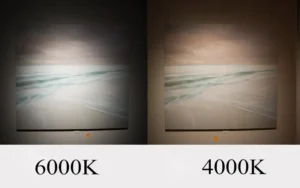
LED: Available from 2200K (very warm, like candlelight) to 6500K (daylight). For security lighting, 4000K–5000K (cool white) improves contrast and makes it easier to identify faces or objects. For ambient lighting, choose 2700K–3000K LEDs that mimic incandescent warmth.
Glare and Light Direction
An incandescent bulb shines light in all directions (omnidirectional). In many outdoor fixtures, half that light gets wasted inside the housing. LEDs can be designed to shine light exactly where you need it—downward on a step, outward from a wall sconce, or in a narrow beam for spotlights. This reduces light pollution and improves visibility.
Durability and Weather Resistance in Harsh Outdoor Environments
The outdoor environment is a brutal testing ground for electrical components. Fixtures must endure punishing wind loads, heavy rainstorms, seasonal temperature extremes, freezing ice, and constant vibration from nearby traffic or mechanical systems.
Incandescent lighting is structurally fragile. The outer envelope is crafted from thin glass, vacuum-sealed to protect the internal filament. A sharp impact from flying debris, hail, or constant vibrations can easily break the glass or fracture the delicate glowing filament, causing immediate failure.
| Environmental Factor | Incandescent Performance | LED Performance |
| Mechanical Vibration | Poor (Filament breaks) | Excellent (Solid-state) |
| Extreme Cold Weather | Fair (Slower to warm up) | Superb (Runs more eff.) |
| Thermal Shock (Rain/Ice) | Critical Risk (Shatters) | Zero Risk (No hot glass) |
LEDs completely lack fragile components. As solid-state electronic devices, the light-emitting chips are mounted directly onto a rigid printed circuit board (PCB) and safely encapsulated in durable polymers or heavy-duty acrylics. This construction makes them inherently resistant to mechanical shocks and structural vibrations.
Additionally, because LEDs do not rely on heat to function, they perform exceptionally well in freezing outdoor temperatures. Cold environments actively lower the diode’s internal junction temperature, which actually increases the light output and extends the lifespan of the semiconductor.
How to Choose the Right Outdoor Lighting for Your Needs
Now that we’ve weighed every factor, here’s a practical decision framework. Use this to match the technology to your specific outdoor situation.
Choose Incandescent ONLY if:
The light is used less than 2 hours per week (a decorative holiday spotlight in a covered location).
You absolutely require 100 CRI color accuracy for art or merchandise.
You have an existing outdoor dimmer that isn’t LED-compatible and you don’t want to change it.
You need a heat source inside the fixture (rare – e.g., to prevent freezing of a small pump or sensor).
Choose LED for EVERYTHING ELSE, especially:
Porch lights that run dusk to dawn.
Security floodlights (motion or always-on).
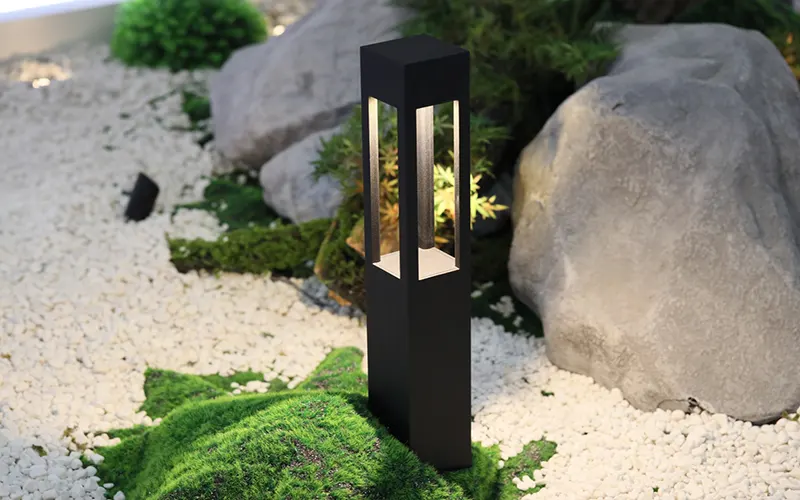
Garden path and landscape lighting (low voltage).
Hard-to-reach fixtures (high ceilings, eaves, flagpoles).
Any light exposed to rain, snow, or vibration.
Areas where bugs are a nuisance.
You want to lower your electric bill without sacrificing brightness.
Conclusion
So, which is better for outdoor use: LED or incandescent? After comparing advantages, energy efficiency, lifespan, light quality, and durability, the answer is clear for the vast majority of homeowners.
In 95% of outdoor applications, LED lighting is the undisputed best choice. It can save you 80% to 90% on electricity costs, boasts a lifespan of 15 to 20 years, offers superior resistance to rain and cold, and is less prone to attracting insects and flies.
We cordially invite you to explore our extensive product catalog, featuring high-performance outdoor architectural LED lighting systems. Contact us today to request custom product samples, obtain quotes for bulk purchases, and access detailed specifications for OEM/ODM projects.
FAQs
Are LED lights better than incandescent lights for outdoor use?
Yes, LED lights are generally better for outdoor use because they consume less energy, last much longer, and perform better in harsh weather conditions. They also require less maintenance and provide higher brightness efficiency than incandescent bulbs.
Why do incandescent outdoor lights use more electricity?
Incandescent bulbs create light by heating a filament, which wastes a large amount of energy as heat. In contrast, LED lights convert most of their energy directly into light, making them far more energy-efficient.
Do LED outdoor lights work well in cold weather?
Yes, LED lighting performs very well in cold temperatures. Unlike incandescent bulbs, LEDs maintain stable brightness and efficiency in winter conditions, making them ideal for outdoor applications.
Can LED lights replace incandescent outdoor bulbs?
Yes, in most cases LED bulbs can directly replace incandescent outdoor bulbs, provided the fixture and voltage are compatible. Many LED bulbs are designed to fit standard outdoor lighting fixtures.
Are outdoor LED bulbs recyclable?
Yes. LEDs contain no mercury (unlike CFLs) and are generally safe to dispose of with regular trash, but recycling is better. The small circuit board inside contains trace amounts of metals like copper and aluminum that can be recovered.