The office is where employees spend a large portion of their day—whether they’re drafting reports, collaborating on projects, or attending virtual meetings. The right commercial office lighting does more than just illuminate the space; it shapes employee productivity, protects eye health, enhances workspace aesthetics, and even impacts a company’s bottom line.
Poor lighting, on the other hand, can lead to eye strain, fatigue, reduced focus, and unnecessary energy waste. To simplify the process, we’ve compiled the 7 key factors you need to consider, ensuring your office lighting is functional, comfortable, and aligned with your business goals. Let’s dive in.
Table of Contents
1. Lighting Quality and Color Temperature: The Foundation of a Comfortable Office Environment
For commercial offices, color temperature is particularly critical. Warm light (2700K–3500K) has a yellowish hue, similar to natural sunlight at dawn or dusk, and is ideal for break rooms, reception areas, or spaces where relaxation is a priority.
Cool light (5000K–6500K) is bright and crisp, mimicking natural daylight, and is perfect for open workstations, conference rooms, and task areas—this temperature helps boost alertness and reduce eye strain during long work hours.
Neutral light (3500K–5000K) strikes a balance between warm and cool, making it a versatile choice for mixed-use spaces, such as private offices or collaborative zones.
Color Rendering Index (CRI)—a measure of how accurately light reveals the true color of objects. A CRI of 80 or higher is recommended for offices, as it ensures colors appear natural and consistent, which is essential for tasks like graphic design, customer meetings, or product inspections.
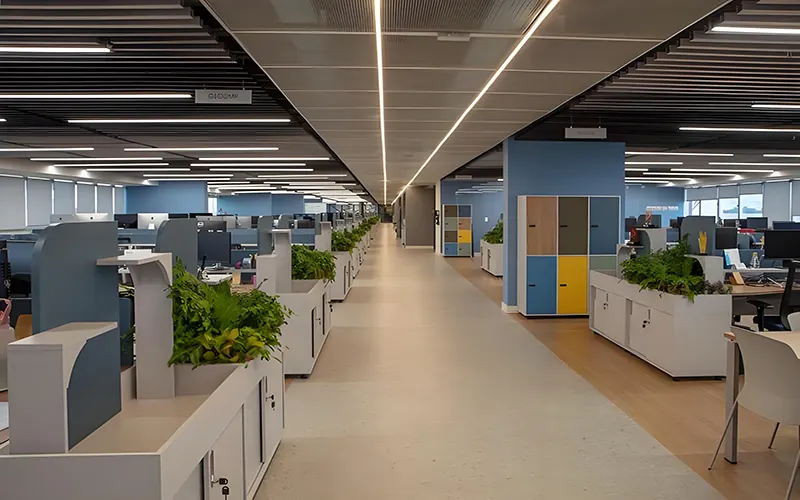
2. Energy Efficiency: Balancing Cost-Saving and Environmental Sustainability
Energy efficiency is a top priority for modern businesses, both for cost reduction and sustainability goals.
Beyond the bulbs themselves, consider smart controls:
- Occupancy Sensors: Automatically turn lights off in meeting rooms or restrooms when they are not in use.
- Daylight Harvesting: Sensors that dim artificial lights when natural sunlight is sufficient, maintaining a consistent light level while slashing energy bills.
3. Lighting Levels and Brightness: Meeting Workspace Functional Needs
Proper lighting levels are essential to ensure employees can perform tasks comfortably and accurately. Lighting is typically measured in lux (lx).
Recommended lighting levels for common office areas:
- Open office workstations: 300–500 lux
- Meeting rooms: 300–500 lux
- Reception areas: 200–300 lux
- Corridors and hallways: 100–200 lux
Over-lighting can cause glare and discomfort, while under-lighting reduces productivity and increases eye strain. The goal is to achieve balanced illumination tailored to each workspace function.
4. Glare Control: Protecting Employee Eye Health and Reducing Fatigue
There are two main types of glare: direct glare (from light fixtures themselves) and indirect glare (from light reflecting off surfaces like computer screens, desks, or walls).
To control direct glare, choose lighting fixtures with diffusers or frosted covers, which soften the light and prevent it from shining directly into employees’ eyes. Avoid placing bright fixtures directly above workstations or facing seating areas. Instead, opt for recessed lighting, pendant lights with downward-facing shades, or track lighting that can be adjusted to direct light away from eye level.
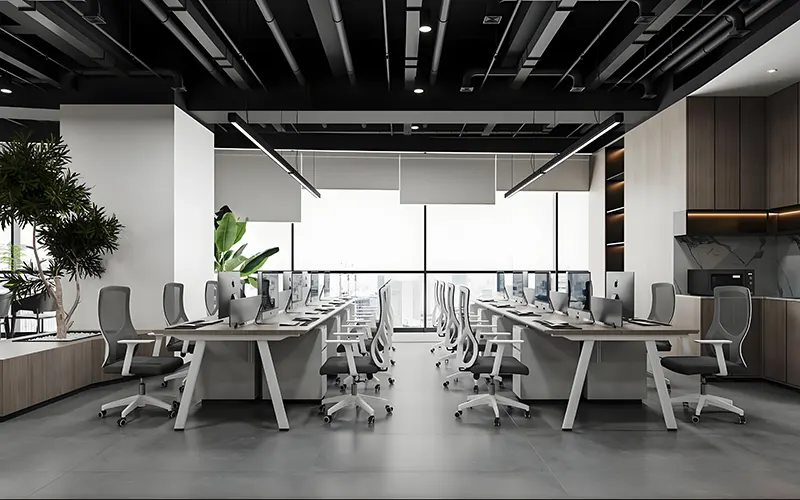
5. Durability and Maintenance Requirements: Long-Term Operational Cost Considerations
For commercial property managers, the “Total Cost of Ownership” is more important than the initial purchase price.
Choose fixtures with a high-rated lifespan (at least 50,000 hours). Additionally, consider the driver quality in LED systems, as the driver is often the first component to fail. Opting for modular designs where components can be easily swapped without replacing the entire fixture will save significant time and money over a decade of operation.
6. Lighting Layout and Fixture Placement
A modern approach involves zonal lighting. By grouping lights into zones, you can provide bright, high-intensity light over collaborative workstations while maintaining softer, more atmospheric lighting in reception areas. Ensure that the placement minimises shadows, particularly at workstations, to keep the environment feeling open and inclusive.
7. Architectural Integration: Utilizing LED Aluminum Profiles
Modern office design demands sleek, minimalist aesthetics that blend seamlessly with the architecture. This is where LED Aluminum Profiles (or LED Channels) become essential.
These profiles allow for:
Linear Lighting: Creating continuous lines of light across ceilings or walls to guide movement and define spaces.
Recessed Installation: Mounting light strips directly into drywall or cabinetry for a “flush” look that doesn’t clutter the visual field.
Thermal Management: The aluminum acts as a heat sink, significantly extending the life of the LED strips inside.
Customization: Profiles can be cut to any length and configured into geometric shapes, turning functional lighting into a piece of architectural art.
Conclusion
Choosing the right commercial office lighting is a decision that impacts your employees, your budget, and your brand. By considering these 7 key factors—lighting quality and color temperature; energy efficiency; lighting levels and brightness; glare control; durability and maintenance; lighting layout and fixture placement; and architectural integration—you can create a workspace that is comfortable, productive, and aligned with your business goals.
Ready to transform your office space? Consider working with a professional lighting supplier to develop a customized solution tailored to your space, ensuring optimal performance and a modern, professional environment.