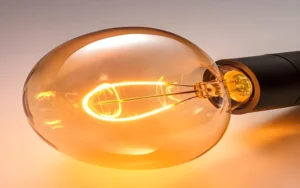
Bollard lights, those sleek vertical fixtures gracing pathways, parks, and commercial spaces, play a pivotal role in illuminating outdoor areas while enhancing their visual appeal. But one question consistently arises for homeowners, designers, and facility managers alike: How far apart should bollard lights be placed? The answer isn’t a one-size-fits-all solution; it hinges on a mix of technical factors, application needs, and even personal preference. Get it right, and you’ll enjoy uniform, glare-free illumination that keeps spaces safe and inviting. Get it wrong, and you’ll end up with dark spots, wasted energy, or an unbalanced design.
In this article, we’ll break down the key elements that dictate bollard light spacing, share scenario-specific guidelines, and help you avoid common pitfalls—all to ensure your outdoor lighting installation is both effective and visually pleasing.
Table of Contents
Key Factors That Determine Bollard Light Spacing
Several technical and environmental variables dictate how close or far apart your fixtures should be:
- Required Footcandles (fc): Most lighting projects require at least 1 footcandle of light for basic safety. The specific use of the area determines the exact light level needed.
- Existing Light Sources: If the area already has ambient light from streetlights or nearby buildings, bollards may only be needed for secondary ambiance. Conversely, areas near stairs or hazards require more concentrated light.
- Local Regulations: Many municipalities have strict codes regarding mounting height, minimum light levels, and light trespass (light spilling into neighboring properties).
- Surface Reflectivity: The ground material matters; surfaces like concrete reflect more light than grass or dark asphalt, which can influence how many fixtures you need.
- Client Preference: Often, the final decision is a “personal choice” based on the desired architectural aesthetic or the specific mood—warm or cool—intended for the space.
General Spacing Guidelines for Bollard Lights (By Application Scenarios)
These recommendations balance safety, functionality, and aesthetics, serving as a starting point for your installation:
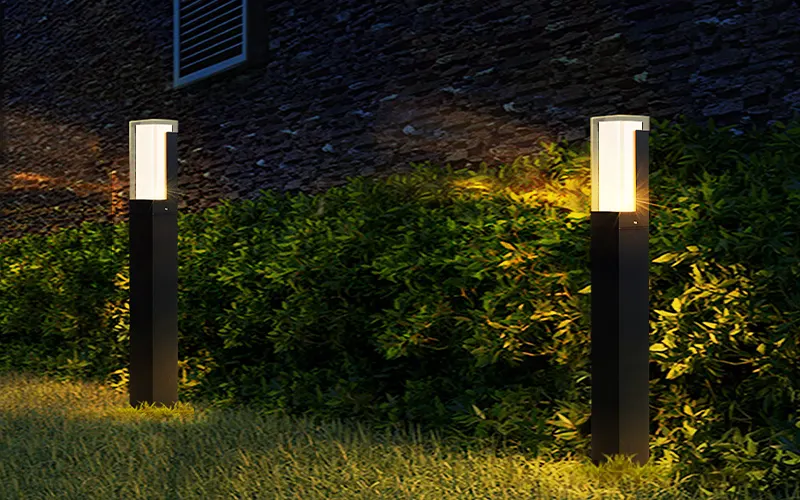
Tighter Spacing (10–15 feet): Ideal for high-safety areas where continuous illumination is critical. This includes hospitals, office campuses, and residential walkways. For example, a hospital walkway might use bollards spaced 12 feet apart along a concrete path to ensure consistent visibility for patients and staff at night, eliminating dark spots that could pose hazards.
Medium Spacing (15–25 feet): Perfect for urban parks, commercial plazas, and community gardens. These spaces need a balance of light coverage and natural aesthetics—wide enough to avoid a cluttered look, but tight enough to keep pathways safe. Urban parks often use this spacing to highlight greenery while ensuring pedestrians can navigate comfortably after dark.
Wide Spacing (30+ feet): Suited for low-traffic leisure paths, large, sprawling landscapes, or areas where ambiance is the priority. Think rural trails, golf courses, or large backyard gardens. Wider spacing creates a soft, ambient glow that enhances the natural environment without overwhelming it. For these areas, bollards are often used to highlight landscaping features rather than provide intensive illumination.
Calculating Bollard Light Spacing: A Simple Step-by-Step Guide
Step 1: Determine required footcandles (fc) for your space. Start with IESNA guidelines (e.g., 1 fc for most pathways, 2–3 fc for high-traffic areas) and cross-check with local codes. If you’re unsure, consult a lighting specialist.
Step 2: Check your bollard’s specifications. Locate the light output (lumens) and optics type (louver, reflector, Type V) from the product manual. For example, a 15-watt Type V bollard typically covers 1 fc over a 12-foot diameter.
Step 3: Use the “coverage diameter” to calculate spacing. For uniform lighting, space bollards so their coverage areas overlap by 30–50%. If your bollard covers 12 feet (Type V), overlap by 4 feet (33%)—so spacing would be 12 – 4 = 8 feet? No, wait: overlap means the distance between bollards should be less than the coverage diameter. For a 12-foot coverage diameter, spacing of 24 feet or less ensures overlap (since 12-foot diameter from each bollard meets in the middle). For louvered bollards (4.5-foot coverage), spacing should be 9 feet or less to avoid dark spots.
Step 4: Adjust for existing light sources. If other fixtures (e.g., streetlights, wall sconces) already illuminate the area, add 5–10 feet to your calculated spacing—bollards can serve as supplemental lighting for ambiance.
Step 5: Factor in safety and aesthetics. If the area has stairs, slopes, or vehicle traffic, reduce spacing by 2–3 feet for better visibility. If aesthetics are a priority, adjust spacing to align with landscaping or architectural lines (e.g., spacing bollards to match the distance between trees).
The Impact of Wattage and Optics on Installation Density
Choosing the right internal components can significantly change how many bollards you need to purchase.
Optics Type
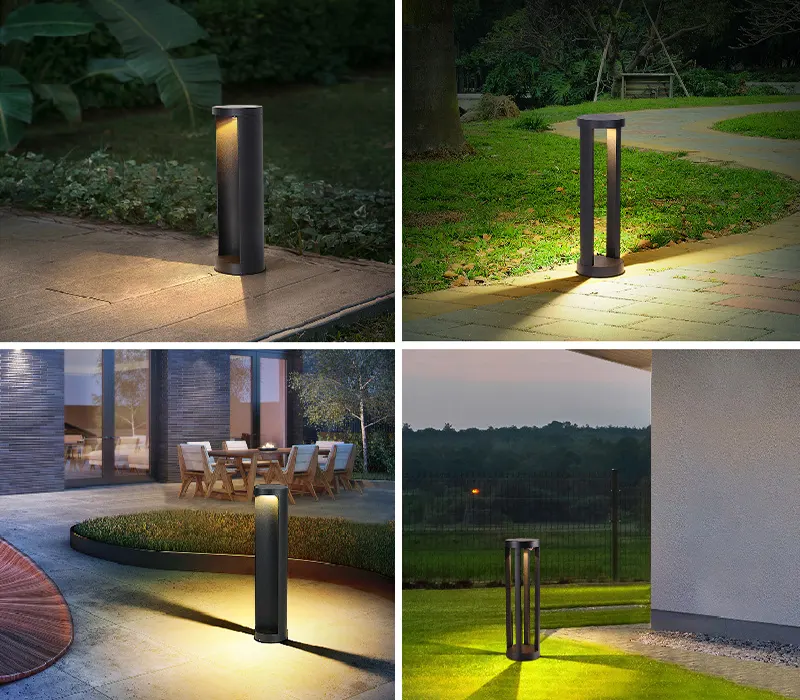
Louvers: These focus light downward, which is excellent for reducing glare but typically requires tighter spacing because the light spread is narrower.
Type V Glass: These offer the broadest distribution, allowing for the widest possible spacing between posts.
Specialized Reflectors: Cone reflectors can spread light over a medium-sized diameter (roughly 7.5 feet for 1 fc), sitting between louvers and Type V in terms of density.
Wattage
Higher wattage LEDs can illuminate larger areas, which “sometimes” allows you to reduce the total number of fixtures. However, this strategy does not work with louvered optics and must be used carefully to avoid blinding pedestrians or drivers with excessive brightness.
Common Mistakes in Bollard Light Spacing
Avoiding these frequent pitfalls will ensure a safer and more professional result:
Creating “Max/Min” Hazards: Using excessive wattage can create spots that are too bright next to dark shadows, making it difficult for the human eye to adjust.
Ignoring Light Trespass: Failing to consider how light affects neighboring properties can lead to code violations and complaints
.
Overlooking Glare: Placing high-wattage bollards in areas where vehicles are present can blind drivers, creating a significant safety risk.
Inconsistent Spacing: While aesthetic choice is important, irregular spacing can lead to “dark spots” along a path where light levels fall below safety standards.
Conclusion
By understanding how technical factors like optics and wattage interact with the specific needs of your environment, you can design a lighting scheme that is as functional as it is beautiful. While technical guidelines provide the foundation, remember that the best installations are those tailored to the unique architectural context of your project.
Explore our wide selection of LED bollards—and contact a Lummilight specialist today to find the perfect solution for your project.
FAQs
Are bollard lights enough for security lighting?
Bollard lights alone are usually not sufficient for full security lighting. They are best for guiding pathways and improving visibility at ground level. For security purposes, they should be combined with higher-mounted lighting such as floodlights or wall-mounted fixtures.
What factors influence the spacing of bollard lights?
Several factors affect spacing, including the required footcandles for the area, whether other light sources are present, and the specific type of optics used in the bollard.
Can existing light sources impact how I space my LED bollards?
Yes, if other light sources already provide sufficient illumination, bollards may be added primarily for ambience rather than visibility. If existing light is insufficient, such as near stairs or steps, bollards are used to provide essential supplemental light.
How does LED wattage affect the spacing distance?
Higher-wattage LEDs can illuminate larger areas, which may reduce the total number of fixtures needed. However, this effectiveness depends on the optics; for example, higher wattage will not work to increase spacing if louvred optics are used.
Can personal preference override technical recommendations?
Yes, aesthetic preference and design intent often play a major role in final placement. The final installation is often tailored to meet specific thematic goals or architectural styles.