Too many barbers invest thousands of dollars in premium clippers, shears, and chairs, only to light their stations with cheap ceiling fixtures that cast harsh shadows and distort color. The result is uneven fades, frustrated barbers, and clients who leave questioning your skills—not because you cut poorly but because they could not see properly. Great barbershop lighting design is not a luxury. It is a functional tool.
Table of Contents
Why Lighting is the Most Overlooked Tool in Your Barber Chair
Ask most barbers what matters most for a perfect cut, and they will name their clippers, their blade sharpness, or their shear technique. Rarely does anyone say lighting. Yet lighting directly affects how well you see hair texture, skin tone, and transition lines. When your light source comes from directly above—as it does in most standard retail spaces—your own head and hands cast shadows directly onto the client’s hair and face. You end up leaning, twisting, and straining your neck just to see what you are doing. That is not skill. That is poor design.
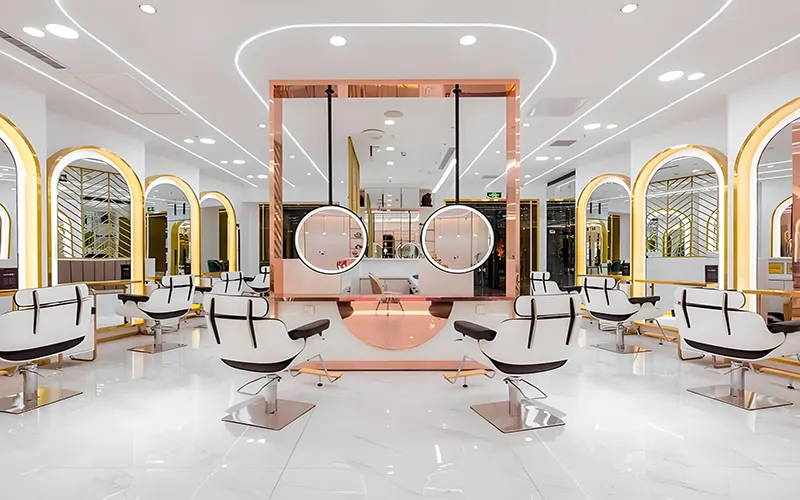
The 3 Pillars of Barbershop Lighting: Brightness, Color Temp. & CRI
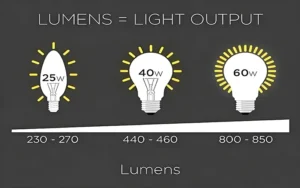
Brightness (Lumens). Brightness is measured in lumens, not watts. Many barbers mistakenly buy high-wattage bulbs thinking they are getting more light, but wattage only measures energy use. Instead, focus on lumens. For a single barber station, you need a minimum of 2,000 to 4,000 lumens directed at the cutting area. Too little light forces you to squint. Too much light creates glare and client discomfort.
Color Temperature (Kelvin). For barbershops, the ideal range is 4000K to 5000K—often called natural white or cool white. This range reveals true hair color, distinguishes between black and dark brown, and shows grey hairs accurately. Avoid anything below 3500K and anything above 5500K.
CRI (Color Rendering Index). CRI measures how accurately a light source reveals the true color of objects compared to natural sunlight. For barbers, you need a CRI of at least 90, and 95 or higher is even better. Why does this matter? Because low CRI can make blonde hair look brassy, grey hair look yellow, and skin tones look unnatural. High CRI ensures that what you see is what your client will see when they walk outside.
How to Light the Barber Chair (Zero Shadows)
Specifically, vertical LED light strips or bars installed on the left and right sides of the mirror create light that hits the client’s head from the front and sides, not from above. Because you stand between the client and the mirror, front lighting shines over your shoulders and onto your work area. This completely eliminates the barber’s shadow. Many professional barber stations now come with integrated LED mirrors that include adjustable color temperature and brightness controls. If you cannot replace your mirrors, install two vertical LED bars directly on the mirror frame, spaced about 6 to 12 inches apart from the edges.
Do not rely solely on overhead lighting. Overhead recessed lights are fine for general ambient illumination, but they should never be your primary task light. Use overhead lights set to 4000K with dimmers to fill the room, then rely on mirror-mounted or wall-mounted front lights at 5000K for high-detail cutting work. Additionally, consider adding an adjustable floor lamp or a small spotlight on a track that you can reposition when working on the sides or nape of the neck.
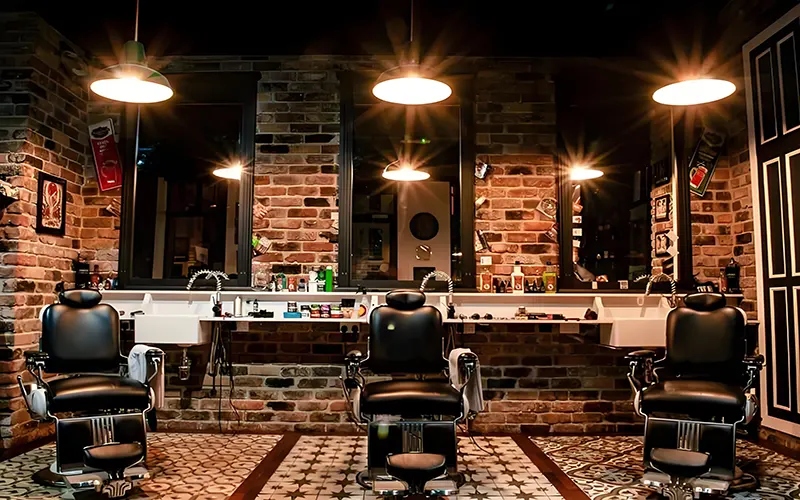
What are some common lighting fixtures used in barbershop lighting?
LED Mirror Lights (Vertical Bars). This is the most important fixture for any cutting station. Typically sold as aluminum LED strips in lengths of 12 to 48 inches, they mount directly onto the sides of your mirror.
Adjustable Track Lighting. Track lighting consists of a ceiling-mounted rail with multiple adjustable light heads. The advantage is flexibility. You can point each head at a different station or angle them away from the mirror to reduce glare.
Recessed Downlights (Cans). These are the standard round lights recessed into the ceiling. They are good for ambient lighting—filling the room with general illumination—but poor as primary cutting lights because they create overhead shadows. Use them on a dimmer switch so you can lower ambient light when you want to focus on your mirror lights.
Neon Strip and LED Wall Art. While not functional for cutting, decorative neon strips and backlit wall art are staples of barbershop aesthetics. Place them on walls that clients face while waiting, or behind the barber chair as a visual statement.
Vintage-Inspired Pendant Lights. These are popular for shops aiming for a retro or industrial look. They should never be used as task lighting over cutting stations. Their low CRI and warm color temperature distort hair color. Keep them strictly for ambience.
The Barbershop Lighting Checklist (Don’t Buy Before Reading This)
Before you buy new lighting fixtures, please carefully check against this professional checklist to ensure your budget is not wasted:
- Is the CRI 90 or higher? (Essential for color accuracy).
- Is the color temperature between 4000K and 5000K? (Best for visibility).
- Do I have a “flicker-free” driver? (Important for those who film content for Instagram/TikTok).
- Is the layout multi-directional? (To eliminate shadows).
- Is the lighting dimmable? (Useful for the wash station where clients want to relax).
- Are the LED profiles high-quality aluminum? (Ensures heat dissipation so the LEDs last for years without dimming).
Conclusion
Great barbershop lighting design is not about buying the most expensive fixtures or copying what you see on Pinterest. It is about understanding three simple principles: high CRI for true color, color temperature for accuracy, and front-mounted lighting to eliminate shadows. When you get these elements right, you will work faster, cut more precisely, and impress clients who finally see their haircuts in the best possible light.
Browse our collection today or contact our team for a custom lighting consultation.