When it comes to illuminating large commercial, industrial, or recreational spaces, choosing the right lighting isn’t just about brightness—it’s about matching the fixture to your space’s unique needs. High bay vs low bay lighting are two of the most common solutions for tall indoor areas, but confusing them can lead to wasted energy, poor visibility, and even safety hazards. Whether you’re outfitting a warehouse, gym, retail store, or manufacturing facility, understanding the key differences between these two lighting types is critical to making an informed decision.
Table of Contents
What Are High Bay and Low Bay Lights?
High bay and low bay lights are specialized overhead lighting fixtures designed for indoor spaces with tall ceilings, but they differ in their design, brightness, and intended use. Both are engineered to deliver focused, efficient light over large areas, but their specifications are tailored to the height of the space they illuminate.
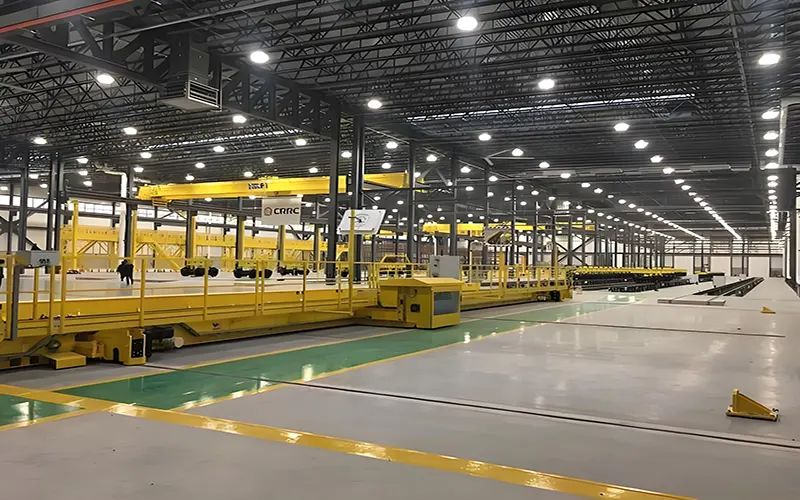
High bay lights are built for spaces with very tall ceilings, typically 20 feet (6 metres) or higher. They feature high lumen outputs and specialized optics to ensure light reaches the ground evenly, even from significant heights. These fixtures are often used in industrial settings where visibility is critical for safety and productivity.
Low bay lights, by contrast, are designed for spaces with shorter, tall ceilings—usually between 10 and 20 feet (3 to 6 metres). They have lower lumen outputs than high bay lights, as they don’t need to compensate for extreme height. Their optics are optimized for closer distances, providing uniform light without glare or wasted brightness.
Key Differences Between High Bay and Low Bay Lighting
While they share a common purpose, several technical and structural differences set these fixtures apart:
Wattage and Strength: Low bay lighting typically operates at power levels below 100 watts, whereas high bay lighting can exceed 100 watts.
- Lumen Output: High bay lights require a significantly higher lumen output to compensate for the greater distance to the floor and to prevent shadows. Low bay lights lose less light due to proximity and therefore require fewer lumens.
- Hanging Methods: Low-bay fixtures are generally suspension-mounted using chains or hooks. High bay lights offer more flexibility, hanging from hooks, chains, or pendants, or being fixed directly to the ceiling like a troffer light.
- Reflectors and Lenses: Low bay fixtures use reflectors or lenses to spread light and minimise glare. High bay fixtures utilise specialised aluminium reflectors to direct light downward or prismatic components to diffuse light to illuminate elevated objects like shelves.
Ceiling Height Guidelines: When to Use High Bay vs Low Bay Lighting
The most straightforward way to determine whether to use high bay or low bay lighting is to consider your space’s ceiling height.
High Bay Lights: 20 Feet (6 Meters) and Above – If your space has a ceiling height of 20 feet or higher, high bay lights are the only practical choice. At these heights, low bay lights would fail to deliver enough brightness to the ground, resulting in dim, uneven lighting that can compromise safety and productivity. Common spaces in this category include large warehouses, manufacturing facilities, airport hangars, and indoor sports arenas (e.g., basketball courts with high ceilings).
Low Bay Lights: 10 to 20 Feet (3 to 6 Meters) – For ceilings between 10 and 20 feet, low bay lights are optimal. Using high bay lights in these spaces would create excessive glare and wasted energy, as their high lumen output is unnecessary. for shorter distances. Spaces like small retail stores, gyms, community centres, and small warehouses or workshops often fall into this range.
Light Distribution and Beam Angle Explained
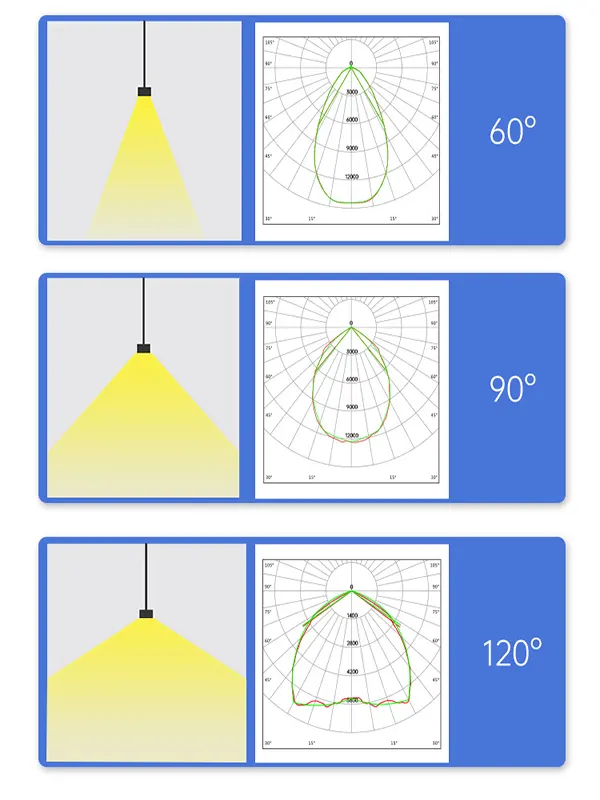
The beam angle—the spread of light from the fixture—differs based on the intended installation height.
High Bay Beam Angles: Common angles include 60°, 90°, and 120°. A narrower beam helps create a focused throw that maintains high lux levels on the floor despite the long distance.
Low Bay Beam Angles: These typically use a 120° beam angle. Because the roof is lower, a wider angle allows for an excellent distribution of light across the space. Lens angles are often employed in low bays to spread the light further and maintain desired brightness in specific areas.
Where to Use High Bay Lighting
High bay lights are ideal for large, tall spaces where visibility and safety are top priorities. Their high lumen output and wide beam angles make them perfect for environments that require consistent, bright lighting over vast areas. Here are the most common applications:
Warehouses and Distribution Centres – Large warehouses with 20+ foot ceilings rely on high bay lights to illuminate aisles, loading docks, and storage areas. Bright, even lighting helps workers locate products, operate machinery safely, and navigate the space efficiently.
Manufacturing Facilities – Factories and production plants often have tall ceilings and require precise lighting for assembly lines, heavy machinery, and quality control. High bay lights ensure workers can see details clearly, reducing errors and accidents.
Airport Hangars – Hangars for commercial or private aircraft have extremely tall ceilings (often 30+ feet) and require powerful lighting to inspect aircraft, perform maintenance, and ensure safe movement of planes and personnel.
Indoor Sports Arenas – Basketball, volleyball, and tennis courts with high ceilings use high bay lights to provide uniform brightness across the playing surface, ensuring players can see clearly and spectators have a good view.
Large Retail Stores – Stores like supermarkets, home improvement centers, and wholesale clubs often have 20+ foot ceilings. High bay lights illuminate large floor areas, making it easy for customers to navigate and find products.
Where to Use Low Bay Lighting
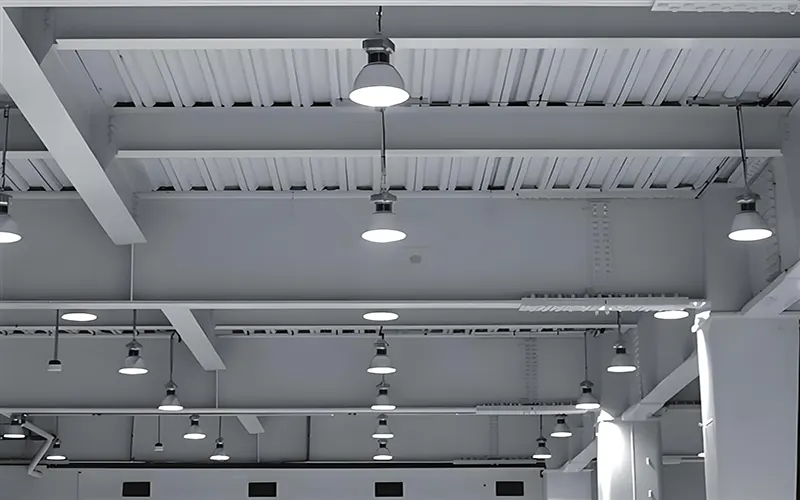
Low bay lights are best suited for shorter, tall spaces (10-20 feet) where balanced, glare-free lighting is key. They’re often used in commercial and recreational settings where aesthetics and comfort are as important as brightness. Here are the top applications:
Small Retail Stores and Boutiques – Stores with 10-15 foot ceilings use low bay lights to highlight merchandise without creating glare. Their compact design and adjustable brightness make them ideal for showcasing products in a welcoming environment.
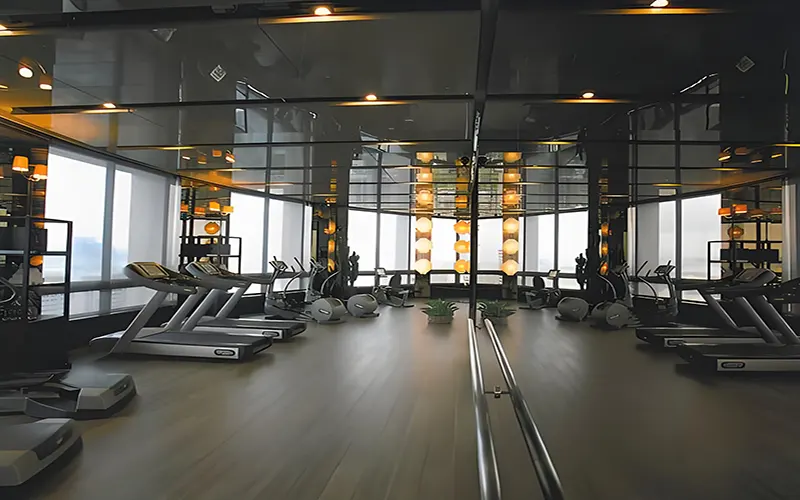
Gyms and Fitness Centers – Gyms with 12-18 foot ceilings rely on low bay lights to illuminate workout areas, weight rooms, and cardio zones. Narrow beam angles prevent glare on mirrors and equipment, ensuring a safe and comfortable workout space.
Community Centers and Recreation Halls – Spaces like community centers, church halls, and small event venues (10-18 foot ceilings) use low bay lights to provide even lighting for activities like meetings, parties, and sports (e.g., badminton and table tennis).
Small Warehouses and Workshops – Compact warehouses, garages, and workshops with 10-20 foot ceilings benefit from low bay lights, which provide adequate brightness for tools and tasks without wasting energy.
Restaurants and Cafés – Some restaurants and cafés have 10-15 foot ceilings (e.g.,industrial-style eateries). Low bay lights add ambiance while ensuring diners can see their food and menus clearly.
Conclusion
Choosing between high bay and low bay lighting ultimately comes down to your space’s ceiling height, size, and intended use. High bay lights excel in tall, large spaces where maximum brightness and wide coverage are needed, while low bay lights are perfect for shorter tall spaces where glare-free, energy-efficient lighting is a priority.
Ready to find the perfect high bay or low bay lighting for your space? Contact our team of lighting experts today—we’ll help you assess your space, recommend the right fixtures, and ensure your lighting meets your needs and budget.
FAQs
Can I use high-bay lights in a low-ceiling space?
It’s not recommended. High bay lights have narrow beam angles and high intensity, which can create glare and uneven lighting in low ceiling environments. Low bay fixtures are better suited for these spaces.
What happens if I use low-bay lighting in a high-ceiling area?
Low bay lights typically won’t provide enough brightness from higher mounting heights. This can result in dim or uneven illumination, making the space unsafe or inefficient for work.
Can high bay and low bay lights be dimmable?
Yes, many LED fixtures support 0–10V dimming, DALI, or smart controls, allowing you to adjust brightness based on your needs and save more energy.
Do high bay lights only illuminate the floor?
No, specialised high bay fixtures can use prismatic components to diffuse light and illuminate vertical surfaces, such as high-reaching shelves in a warehouse. This is critical for tasks like picking items from elevated storage.
What mounting options are available for these fixtures?
- Low Bay: Typically suspension-mounted using chains or hooks.
- High Bay: Can be hung via chains, pendants, or hooks, or fixed directly to the ceiling like a troffer light. Common varieties include round (UFO), linear, architectural, and grid-mount designs.