In 2026, architectural facade lighting is no longer just a functional add-on for buildings—it’s a powerful tool that blends art, technology, and sustainability to redefine urban skylines and enhance building character. Whether you are working on a commercial project, a residential development, or a landmark building, a well-planned facade lighting design can transform how a structure is perceived after dark. from core definitions to supplier selection, ensuring you have the expertise to execute successful facade lighting projects in 2026 and beyond.
What Is Architectural Facade Lighting Design?
Зміст
Architectural facade lighting design is the intentional use of artificial light to highlight a building’s exterior features, textures, and structure after dark. Unlike basic outdoor lighting, which focuses solely on safety, facade lighting is a holistic practice that merges functionality with aesthetics, transforming a building’s nighttime identity while complementing its surrounding environment. It involves selecting appropriate light sources, techniques, and fixtures to emphasize architectural details—such as columns, windows, and textures—while balancing brightness, color, and energy efficiency.
Key Objectives of Facade Lighting Design
A successful facade lighting design always starts with clear objectives. Without defined goals, even high-quality lighting products can fail to deliver the desired effect.
1. Highlight Architectural Features
Lighting helps emphasize textures, lines, and unique design elements such as columns, patterns, or materials.
2. Create Visual Hierarchy
Not every part of a building should have the same brightness. Proper lighting creates contrast, guiding the viewer’s attention.
3. Enhance Brand Identity
For commercial buildings, lighting can reinforce brand image through color, intensity, and dynamic effects.
4. Improve Safety and Functionality
Facade lighting contributes to safer surroundings by improving visibility in entrances, pathways, and surrounding areas.
5. Achieve Energy Efficiency
Modern LED systems allow designers to balance aesthetics with low energy consumption and long-term cost savings.
Types of Facade Lighting Techniques
Professional facade lighting relies on a range of techniques, each suited to different building styles and objectives.
Wash Lighting: This technique uses wide-beam fixtures to “wash” the facade with uniform light, softening details and creating a smooth, even glow. It’s ideal for large, plain surfaces (e.g., concrete or glass facades) and works well for modern buildings aiming for a minimalist look. Wash lighting can be warm or cool, depending on the desired mood.
Grazing Lighting: Grazing involves mounting fixtures close to the facade (typically 6–12 inches away) to cast light at a shallow angle. This technique emphasises texture—such as stone, brick, or decorative panels—by creating dramatic shadows and highlights. It’s perfect for historic buildings or facades with intricate details that need to be accentuated.
Accent Lighting: Used to draw attention to specific features (e.g., windows, columns, sculptures, or signage), accent lighting uses narrow-beam fixtures to create focal points. This technique adds depth to the facade and guides the viewer’s eye to key elements.
Contour Lighting: This technique follows the building’s (e.g., rooflines, edges, or window frames) using linear fixtures (e.g., LED strips) to define its shape. It’s effective for tall buildings or unique architectural forms, helping the structure stand out in the night sky.
Projection Lighting: A growing trend in 2026, projection lighting uses projectors to display images, patterns, or animations on the facade. It’s ideal for commercial buildings, public spaces, or events, adding interactivity and dynamism. Projection can be static (e.g., a brand logo) or dynamic (e.g., seasonal animations).
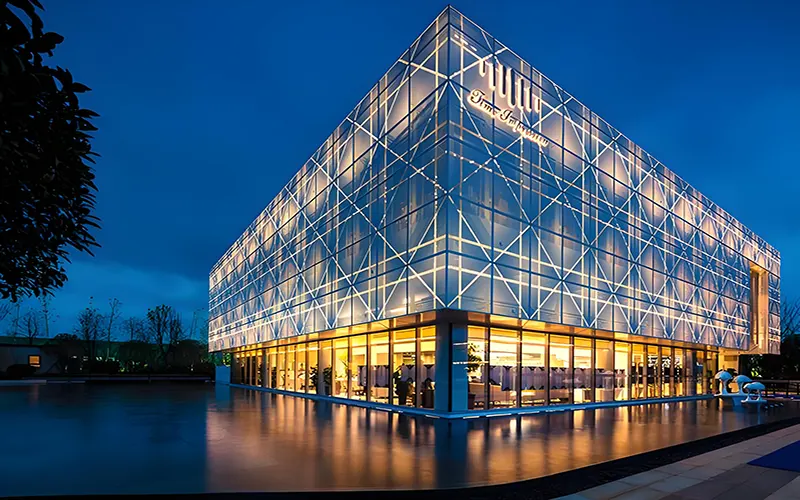
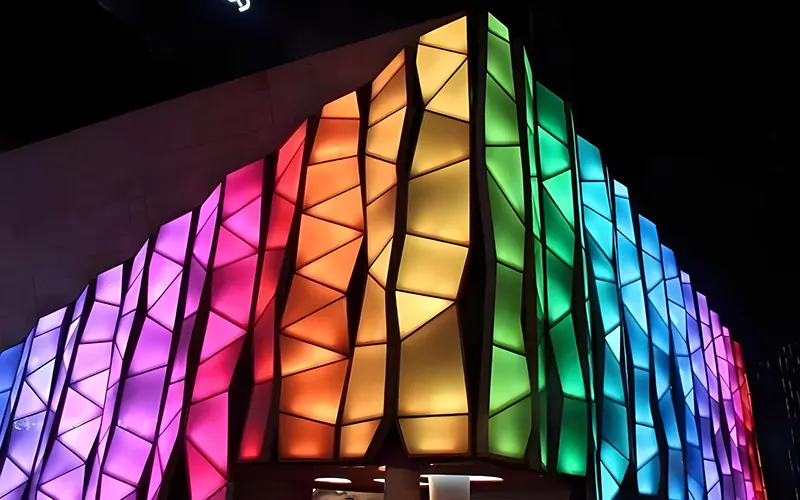
Backlighting: Used for translucent or semi-transparent facades (e.g., glass curtain walls or decorative screens), backlighting creates a glowing effect by placing fixtures behind the surface. This technique adds depth and a modern, ethereal look, often used in contemporary buildings.
Choosing the Right Fixtures for Facade Lighting
The success of a facade lighting project depends heavily on selecting the right fixtures—ones that balance performance, durability, and aesthetics.
Fixture Type: Match the fixture to your lighting technique: wash lighting uses floodlights or wall washers; grazing uses linear wall grazers; accent lighting uses spotlights or narrow-beam floodlights; contour lighting uses LED strips or linear fixtures. For outdoor use, ensure fixtures are rated for exterior conditions (IP65 or higher) to withstand rain, wind, and temperature changes.
Light source: Choose LED bulbs with a lifespan exceeding 50,000 hours—far more energy efficient than traditional incandescent or fluorescent lamps. Select LEDs with a high color rendering index (CRI, 80 or higher) to ensure natural colors that match the true colors of the building facade materials.
Color Temperature: Measured in Kelvin (K), color temperature determines the light’s “warmth” or “coolness.” Warm white (2700K–3000K) is ideal for residential, historic, or hospitality buildings, as it creates a cozy, inviting mood. Cool white (4000K–5000K) works well for commercial or modern buildings, emphasizing clarity and professionalism.
Кут променя: The beam angle (measured in degrees) determines how wide the light spreads. Narrow beams (15°–30°) are for accent lighting; medium beams (30°–60°) for grazing or targeted washing; wide beams (60°+) for full-facade washing. Choose the angle based on the facade’s size and the desired coverage.
Smart Features: Opt for fixtures with smart controls (e.g., DALI, DMX, or Wi-Fi) to adjust brightness, color, and timing remotely. This allows for dynamic lighting effects, energy savings (e.g., dimming during off-peak hours), and easy maintenance.
The 5-Step Design Process for Professional Facade Lighting
A structured design process ensures your facade lighting project is efficient, effective, and aligned with your goals. Here’s the 5-step framework used by professionals in 2026:
- Step 1: Define Goals and Scope: Start by clarifying the project’s objectives (e.g., aesthetic enhancement, safety, brand alignment) and scope (e.g., which parts of the facade to light, budget, timeline).
- Step 2: Analyze the Building and Environment: Assess the building’s architecture, materials (e.g., stone, glass, metal), and surrounding environment (e.g., neighboring buildings, street lighting, natural light). Consider how the facade’s texture, shape, and size will interact with light—for example, rough stone may require grazing lighting, while smooth glass may need wash lighting.
- Step 3: Design the Lighting Scheme: Select the lighting techniques, fixtures, and color scheme based on your goals and building analysis. Use 3D modeling or lighting simulation software (e.g., DIALux evo) to visualize the effect and adjust as needed.
- Step 4: Select Fixtures and Controls: Choose fixtures that meet your performance requirements (e.g., IP rating, CRI, energy efficiency) and integrate with your lighting scheme.
- Step 5: Install, Test, and Maintain: Work with a professional installation team to mount fixtures safely and correctly. Test the lighting to ensure it meets your goals—adjust brightness, angle, or color as needed. Establish a maintenance plan (e.g., regular cleaning, bulb replacement, software updates) to keep the system running efficiently for years to come.
Facade Lighting Design Essentials for Different Building Types
Commercial Buildings (e.g., malls, offices, retail stores): Prioritize brand alignment and visibility. Use dynamic lighting (e.g., color-changing LEDs, projection) to attract customers and highlight signage. For offices, focus on professional, glare-free lighting that enhances the building’s modern aesthetic while saving energy during off-hours.
Residential Buildings (e.g., apartments, villas): Emphasize comfort and privacy. Use warm, soft lighting (2700K–3000K) to create a welcoming mood. Avoid glare and light spillage that could disturb residents. For villas, highlight architectural details (e.g., balconies, landscaping) with accent lighting, while keeping the overall scheme subtle.
Historic Buildings (e.g., museums, heritage sites): Preserve the building’s integrity while highlighting its historical details. Avoid harsh colors or dynamic effects that could detract from the building’s heritage. Comply with local historic preservation regulations and use fixtures that blend with the building’s design (e.g., hidden fixtures).
Public Buildings (e.g., libraries, government buildings, stadiums): Focus on safety, accessibility, and community engagement. Ensure even lighting for walkways and entryways. For stadiums or civic centers, use dynamic lighting to support events and create a sense of community.
Industrial Buildings (e.g., factories, warehouses): Prioritize functionality and safety. Use bright, uniform lighting (4000K–5000K) to illuminate large exteriors and loading areas. Focus on durability—choose fixtures that can withstand industrial environments (e.g., dust, vibrations).
How to Choose the Right Facade Lighting Supplier
Choosing the right supplier is just as important as the design itself. A reliable partner ensures product quality, technical support, and long-term success.
Product Quality and Certification
Look for certified products that meet international standards for safety and performance.
Customization Capabilities
Projects often require tailored solutions, especially for architectural lighting.
Experience in Similar Projects
Suppliers with proven experience can provide valuable insights and avoid common pitfalls.
Technical Support and Service
A good supplier offers design support, installation guidance, and after-sales service.
Висновок
By understanding this guide, you can create facade lighting projects that enhance architectural character, improve safety, and meet modern standards. From selecting the right luminaires to choosing a reliable supplier, every step is crucial to the project’s success.
If you are planning a facade lighting project, working with a professional outdoor lighting manufacturer can make all the difference. We specialize in high-performance outdoor lighting solutions, including Світлодіодні настінні світильники, linear lighting, and customized architectural lighting fixtures tailored to your project needs.
👉 Looking for reliable facade lighting products or project support?
Зв'яжіться з нами today to discuss your project requirements, get expert recommendations, and receive customized solutions designed for your market.
Поширені запитання
Do I need a DMX control system for my building's exterior?
If your project involves colour-changing (RGBW) lights, timed sequences, or dynamic effects, a DMX512 controller is essential. For simple, static white lighting, a standard timer or a DALI system is usually sufficient and more cost-effective.
What IP rating is required for outdoor facade lighting fixtures?
At a minimum, outdoor fixtures should have an IP65 rating (protected against water jets). For ground-recessed lights or fixtures exposed to heavy storms and flooding, an IP67 rating (temporary immersion) is highly recommended to ensure long-term durability and safety.
Is facade lighting energy-efficient?
Yes, modern facade lighting using LED technology is highly energy-efficient. With smart control systems like timers, sensors, and DMX controls, energy consumption can be further reduced.
Can facade lighting be retrofitted to existing buildings?
Yes, retrofitting is a common and cost-effective option for existing buildings. Professionals can design a lighting scheme that works with your building’s existing structure, avoiding major renovations. For historic buildings, retrofits prioritize non-intrusive fixtures (e.g., hidden grazers) to preserve architectural integrity. Smart controls can also be added to existing systems to improve energy efficiency.
Can facade lighting be customized for different projects?
Yes, most professional manufacturers offer customized solutions, including fixture design, beam angles, color temperature, and control systems to meet specific project requirements.