Every Lumens for Outdoor Lighting project I’ve worked on has started with the same question from the client: “How bright do I actually need this to be?” It’s a fair question.
After years of specifying and installing LED fixtures for residential gardens, commercial facades, and everything in between, choosing the right lumen count isn’t about maximizing brightness—it’s about matching light output to the specific purpose of each space.
How Many Lumens Do You Need for Outdoor Lighting?
What exactly is a lumen? A lumen is a measurement of the total visible light emitted by a source. To put it in familiar terms, a traditional 60-watt incandescent bulb produces about 800 lumens. An old 100-watt bulb? That’s roughly 1,600 lumens. The higher the lumen number, the brighter the light—but brightness alone doesn’t tell the whole story.
Here’s where my firsthand experience becomes valuable. When I’m called in to fix a lighting disaster, the most common issue isn’t insufficient lumens—it’s misapplied lumens. A 2,000-lumen spotlight with a narrow 15° beam will appear dramatically brighter and more focused than a 5,000-lumen floodlight with a wide 120° beam because the light is concentrated rather than scattered.
My rule of thumb for outdoor lumens:
| Application Type | Lumen Range | Best Use Case |
|---|---|---|
| Accent/Ambient | 100 – 800 | Pathways, garden beds, steps, decorative features |
| Task/Activity | 800 – 2,500 | Patios, BBQ areas, entryways, garage doors |
| Security/High-Intensity | 2,500 – 10,000+ | Driveways, large yards, commercial perimeters |
Unique insight: Light doesn’t travel in a straight line to your eyes and stop. It bounces. If your fixture is aimed downward or has a frosted diffuser, you’ll lose 30–40% of those lumens before the light even reaches the ground. A 1,600-lumen wall sconce with a diffuser might deliver the same usable light as an 800-lumen bare-bulb pendant. Always consider the fixture design, not just the lumen number on the box.
Recommended Lumens for Different Outdoor Lighting Applications
Here’s how I typically scope lumens by use case, based on projects I’ve actually installed and lived with:
- Pathways and walkways: 50–150 lumens per fixture, spaced 6–8 feet apart. The goal is a gentle pool of light at your feet, not a runway.
- Garden and landscape accents: 50–200 lumens. You’re highlighting a tree, a sculpture, or a flower bed.
- Patios and outdoor living areas: 150–400 lumens total ambient light, often from multiple lower-output fixtures rather than one bright source, to avoid harsh shadows on faces.
- Driveways: 300–700 lumens per fixture, depending on width and whether the drive is straight or curved.
- Building facades and walls: 200–1,000+ lumens depending on wall height and the effect desired — a wash of color needs far less output than illuminating a three-story stone facade.
- Security lighting: 700–2,000 lumens, often paired with motion sensors so the space isn’t blasted with light all night.
- Parking areas and commercial entrances: 2,000–5,000+ lumens per fixture, spaced according to a proper photometric layout.
- Fountains and water features: 100–400 lumens, using submersible or near-water-rated fixtures with a tight beam angle to create shimmer rather than flat illumination.
One thing I always tell clients: total site lumens matter more than any single fixture’s rating.
Recommended Lumens for Different Types of Lighting Fixtures
Each fixture type has unique characteristics that affect how lumens translate into usable light. Based on my project experience, here are specific lumen recommendations for the most common outdoor LED fixtures.
LED Flood Light
Flood lights produce wide, broad beams designed to illuminate large areas.
Recommended lumens: 2,500–5,000 for residential; 5,000–10,000+ for commercial
Firsthand experience: I installed a 3,500-lumen LED floodlight above a client’s garage to cover a 40-foot driveway. The wide 110° beam angle meant the light reached every corner without hot spots.
Product selection advice: Look for floodlights with adjustable brackets or swivel heads. The ability to aim the light downward significantly reduces light pollution and allows you to use lower lumens effectively.
LED Wall Washer Light
Wall washers create a smooth, even wash of light across vertical surfaces—perfect for architectural highlighting and facade illumination.
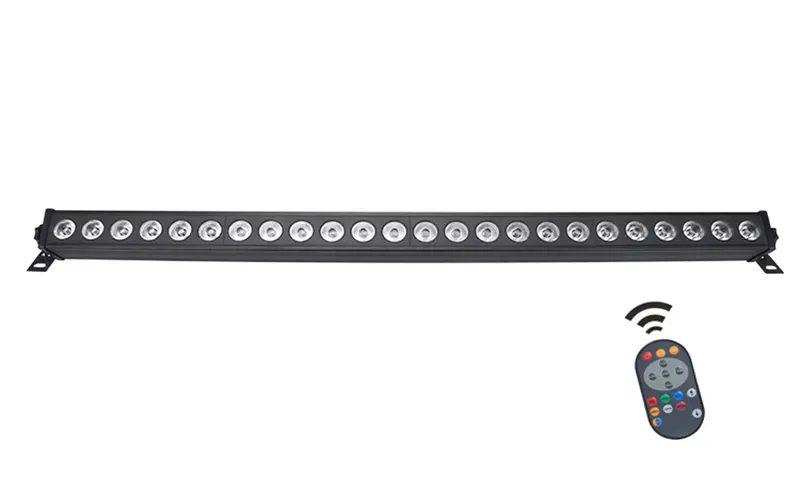
Recommended lumens: 600–1,200 per linear foot
Unique insight: Wall washers rely on proximity and angle. A 900-lumen wall washer placed 6–12 inches from the wall will produce a beautiful grazing effect. Move it 3 feet away, and those same 900 lumens become a dim, uneven mess. Always verify the fixture’s mounting distance specifications before purchase.
Product selection advice: For taller walls (over 15 feet), consider higher-output fixtures (1,200+ lumens) or multiple units spaced evenly.
LED Water Pattern Light
These specialty fixtures project moving or static patterns onto surfaces, commonly used for creating water-ripple effects on walls, ceilings, or pool areas.
Product selection advice: Focus on beam angle and pattern clarity rather than high lumens. Water effects rely on contrast—lower lumens often produce more convincing, subtle patterns.
Palm Tree Ring Light
These innovative light fixtures wrap around palm trunks and project light upwards through the foliage, making them ideal for tropical or resort-style landscapes.
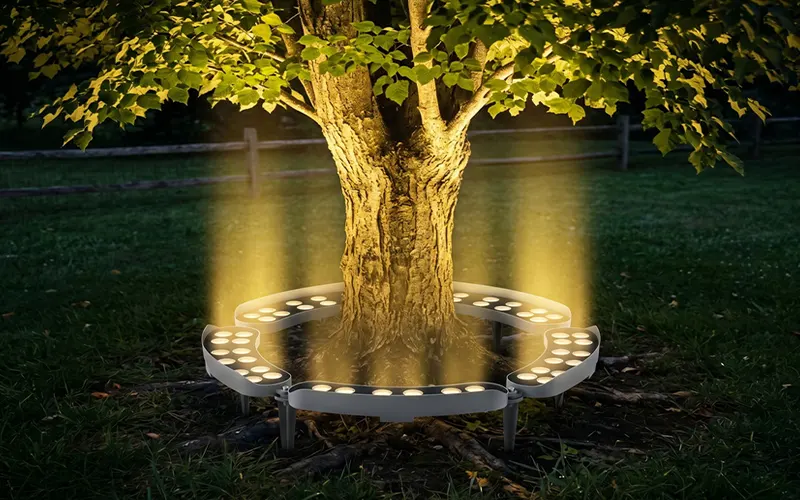
Unique Insight: Light must penetrate dense palm fronds, which absorb a significant amount of illumination. A ring light with a 600-lumen output and a 15-degree beam angle produces excellent lighting results; in contrast, if a wide-beam fixture were used, that same 600-lumen output would yield nothing more than a dim, indistinct patch of light.
Product selection advice: Ensure the ring is adjustable in circumference to fit varying trunk sizes. Look for fixtures with UV-resistant materials, as these are often exposed to intense sun.
LED Garden Light (In-Ground or Spike)
These low-profile fixtures are installed flush with the ground or mounted on short spikes, directing light upward into plants, trees, or architectural features.
Recommended lumens: 200–600
Personal Experience: I once installed 400-lumen ground-spike lights around a boxwood hedge. The effect was very elegant, without causing the green foliage to look overexposed or washed out. For smaller plants or low-growing shrubs, a brightness of 150 to 250 lumens is more than sufficient.
Product selection advice: Choose fixtures with adjustable beam angles (10°–60°). Narrow beams allow you to highlight specific plants; wider beams are better for washing entire planters. Also, prioritize brass or stainless steel construction for longevity in soil contact.
LED Underground Light (In-Ground Recessed)
These fixtures are embedded into driveways, patios, or pathways, projecting light upward from flush-mounted housings.
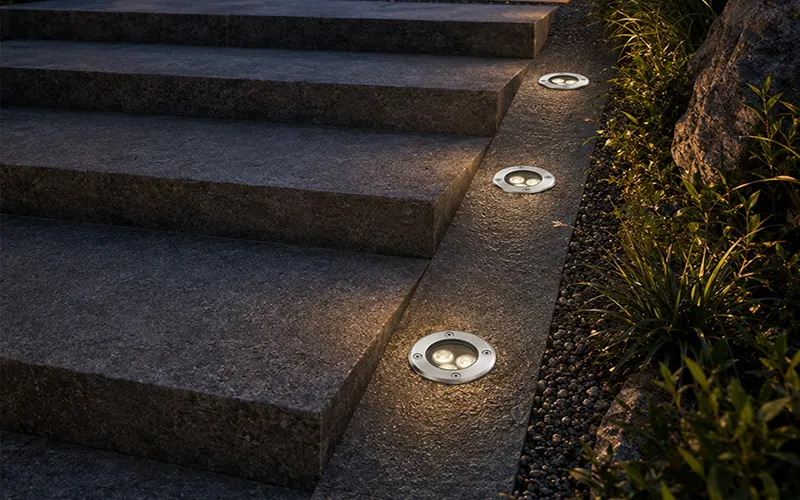
Recommended lumens: 300–800
Unique insight: Underground lights lose lumens to the recessed housing and the fact that they’re installed at ground level—much of the light is absorbed by the surrounding surface. A 600-lumen underground light often delivers less usable illumination than a 300-lumen surface-mounted fixture. Compensate by choosing higher lumen outputs for recessed applications.
Product selection advice: Look for an IK rating (impact resistance)—IK08 or higher is essential for areas with vehicle traffic. Also, ensure the fixture has proper drainage and sealing (IP67 minimum) to prevent water ingress.
LED Fountain Light
Submersible fixtures designed for water features, fountains, and ponds. Water scatters and absorbs light, so these require careful lumen consideration.
Product selection advice: Water absorbs red wavelengths first, so choose cool white (5000K+) or blue LED fixtures for maximum underwater visibility. If you want warm white effects, you’ll need higher lumens (400–600) to overcome water absorption. Ensure the fixture has a minimum IP68 rating for continuous submersion.
LED Wall Light (Surface-Mounted Sconce)
Traditional wall-mounted fixtures for entryways, patios, and exterior walls. These can be up/down lights designs.
Recommended lumens: 600–1,200
Unique insight: The position of the light source within the fixture matters more than the total lumens. A 900-lumen fixture with an upward-facing bulb will bounce light off the ceiling and create soft ambient illumination. A 900-lumen fixture with a downward-facing, fully exposed bulb will create a harsh spot directly below. Choose the style based on your intended effect.
LED Step Light
Designed to illuminate stairs, steps, and grade changes, promoting safety and preventing tripping.
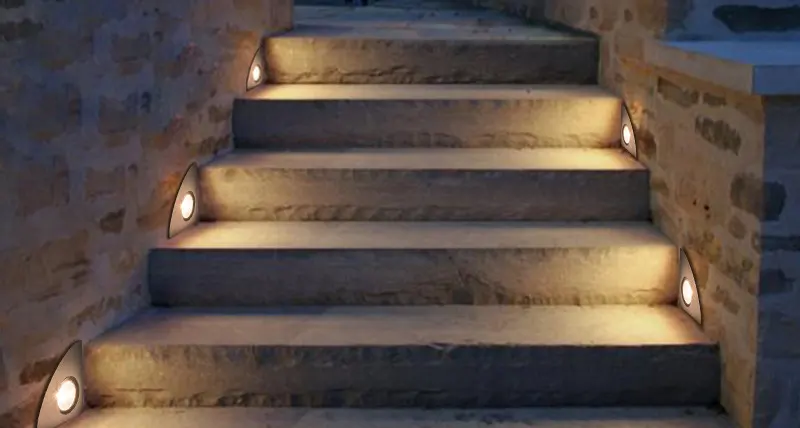
Recommended lumens: 100–300
Firsthand experience: 200 lumens per step light is the sweet spot. At 100 lumens, steps are barely visible, defeating the safety purpose. At over 300 lumens, the glare is blinding when walking down stairs. I replaced 400-lumen step lights for a client who kept tripping despite having “bright” lights—the glare was actually making the steps harder to see.
Product selection advice: Position step lights on the vertical riser, not the horizontal tread. This illuminates the next step’s surface without shining directly into eyes. Look for fixtures with built-in baffles or shields to control glare.
How to Select the Right LED Products for Your Project
After specifying fixtures for hundreds of projects, I’ve developed a straightforward selection process that balances lumens, efficiency, and aesthetics.
Step 1: Define your lighting purpose. Before you look at any lumen numbers, answer these questions: Is this for safety, security, ambiance, or task illumination? Your answer dictates the entire lumen strategy.
Step 2: Calculate total area and mounting height. A 3,000-lumen floodlight mounted at 10 feet will provide excellent ground illumination. The same floodlight at 25 feet will disappoint. As a rule of thumb, usable light decreases by roughly 75% when you double the mounting height.
Step 3: Choose color temperature first, then lumens. Warm white (2200K–2700K) Best for residential architectural surfaces, warm wood decks, landscape foliage, and living spaces. (3000K–4000K) Ideal for commercial facades, modern stone architecture, and pathway security. (5000K+) Reserved primarily for high-level commercial security and industrial parking lots.. Lower color temperatures often require slightly higher lumens to appear as “bright” to the human eye.
Step 4: Check beam angle, not just lumens. A 1,000-lumen narrow-beam spotlight puts intense light on a small area. A 1,000-lumen wide-beam floodlight spreads that same light thinly. Always match beam angle to the space size.
Step 5: Prioritize dimmability. For any space where you’ll spend time (patios, dining areas, lounges), choose dimmable fixtures. This gives you flexibility—higher lumens when hosting and lower lumens for quiet evenings.
I always advise clients to buy one fixture first and test it at night before purchasing in bulk. Lighting conditions, surface colors, and shadows look completely different in the actual installation environment compared to a showroom. Test, evaluate, and then commit to your final lumen choice.
Summary
Selecting the right lumens for outdoor lighting isn’t complicated once you understand the principles. Mounting height, beam angle, and surface colors all influence how those lumens perform in the real world. And always, always test before you commit to a full installation.
If you have specific questions about your project, reach out to our lighting team. We’ve helped thousands of homeowners, landscapers, and contractors find the perfect lumen solutions for every application.
FAQs
Is 5,000 lumens too bright for a backyard?
For residential backyards, 5,000 lumens is almost always excessive unless mounted at a significant height (over 20 feet). For security purposes, I recommend 2,500–3,500 lumens with motion activation. That’s enough to illuminate a large yard without blinding everyone.
Does wall color affect lumen requirements?
Absolutely. Dark surfaces absorb up to 50% of light. A dark brick or dark-stained wood facade needs 1.5–2x the lumens to achieve the same brightness as light-colored surfaces. When installing uplights on dark walls, test higher-lumen options.
Do I need different lumens for different seasons?
Not strictly, but slightly higher output or repositioned fixtures can help compensate once foliage fills in during warmer months and blocks more light than in winter.
Can I mix different lumen outputs within one project?
Yes, and you generally should. Layering brighter task or security lighting with dimmer accent and path lighting creates a more natural, dimensional look than trying to hit one uniform brightness across the entire property.