
If you’ve ever adjusted the brightness of a light by turning a knob or sliding a switch on your wall, you’ve likely used a TRIAC dimmer. It’s the most common type of dimmer found in homes and offices, prized for its simplicity and low cost. But how does this small device actually work its magic, especially with modern LED bulbs?
This guide will walk you through everything you need to know about TRIAC dimmers, from the basic principles to installation, troubleshooting, and compatibility issues.
What Is a TRIAC Dimmer?
A TRIAC dimmer is an electronic device used to control the amount of power delivered to a lighting fixture, thereby adjusting its brightness. The name “TRIAC” stands for Triode for Alternating Current, which is the key electronic component that makes this dimming possible. It’s a type of semiconductor that can conduct current in both directions when it is triggered, making it perfect for controlling AC power .

A TRIAC dimmer is an electronic phase-control switch that rapidly switches AC electrical power on and off up to 120 times per second, effectively reducing the total root-mean-square (RMS) voltage delivered to a light source to control its brightness.
How Does a TRIAC Dimmer Work?
To understand how a TRIAC Dimmer works, it helps to understand the basic behavior of AC electricity.
In an AC circuit, the voltage waveform continuously changes direction. A TRIAC can control when current begins flowing during each half-cycle of the AC waveform.
This process is commonly called phase-cut dimming.
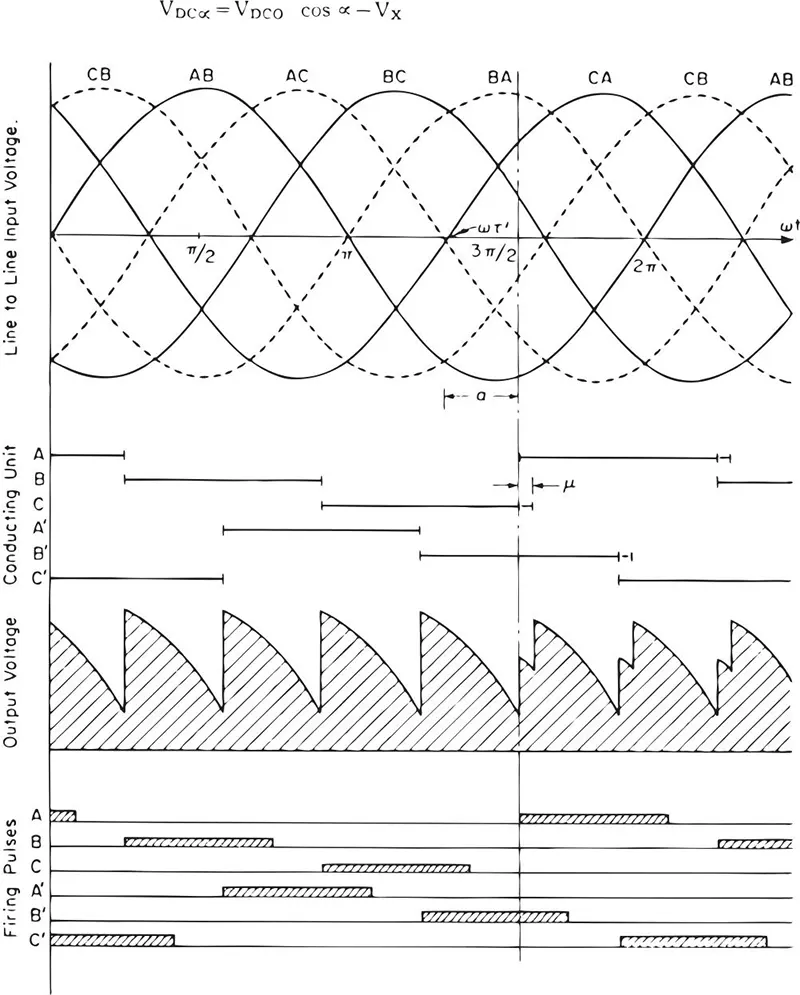
Leading-Edge Dimming
Traditional TRIAC dimmers generally use leading-edge phase-cut dimming.
At the beginning of each AC half-cycle, the TRIAC initially blocks the current. After a controlled delay, it turns on and allows current to flow for the remainder of that half-cycle.
When the delay is short, more of the waveform passes through, producing higher brightness.
When the delay is longer, less of the waveform passes through, reducing the amount of power delivered to the lighting load.
In simple terms:
Shorter delay → more power → brighter light
Longer delay → less power → dimmer light
The TRIAC turns off naturally when the AC current reaches the appropriate point in the cycle, after which the process repeats during the next cycle.
Are TRIAC Dimmers Compatible with LED Lights?
Yes, TRIAC dimmers can be compatible with LED lights, but not every LED product is compatible with every TRIAC dimmer.
This is one of the most important points to understand before purchasing a TRIAC dimming system.
An LED light must have a TRIAC-dimmable driver or power supply if it is going to be controlled directly by a TRIAC dimmer.
For example, if you are installing a 24V LED strip, you generally need:
AC power → TRIAC dimmer → TRIAC-dimmable LED power supply → 24V LED strip
The LED strip itself may operate at 24V DC, while the TRIAC dimmer is installed on the AC side of the power supply.
What Happens If the LED Driver Is Not Compatible?
Using a standard, non-dimmable LED driver with a TRIAC dimmer can result in several problems, including:
- LED flickering
- Limited dimming range
- Buzzing or humming
- Sudden shutoff
- Uneven brightness
- Difficulty turning the light on at low brightness
- Driver overheating or malfunction
Therefore, always check the manufacturer’s specifications before connecting an LED product to a TRIAC dimmer.
TRIAC vs. 0-10V vs. DALI: What’s the Difference?
Selecting the right dimming control system depends on project scale, wiring infrastructure, and control granularities. Here is how TRIAC compares to commercial-grade dimming protocols:
| Feature / Attribute | TRIAC Dimming (Phase-Cut) | 0–10V Dimming | DALI / DALI-2 Protocol |
| Control Signal | Phase-cut AC power line | Analog low-voltage DC (0V to 10V) | Digital bi-directional bus protocol |
| Wiring Required | 2 Wires (Existing Line & Neutral) | 4 Wires (2 AC Power + 2 Control Wires) | 4-5 Wires (Power + 2 Digital Bus Wires) |
| Primary Application | Residential, Hospitality Retrofits | Commercial Offices, Industrial Warehouses | Smart Buildings, Architectural Spaces |
| Addressing Ability | Global / Circuit-level only | Group / Circuit-level | Individual Fixture Addressing |
| Installation Cost | Lowest (No extra wiring needed) | Moderate | High (Requires specialized commissioning) |
| Dimming Range | 1% to 100% (Driver dependent) | 1% to 100% | 0.1% to 100% (Ultra-smooth) |
Summary of Differences:
- Choose TRIAC if you are updating an existing building where pulling new low-voltage signal cables through walls is cost-prohibitive.
- Choose 0-10V for open-plan commercial offices where straightforward, robust analog grouping is needed over long cable distances.
- Choose DALI for complex architectural environments requiring individual light fixture control, dynamic daylight harvesting, and automated central management software.
Advantages and Disadvantages of TRIAC Dimmers
Like any technology, TRIAC dimmers come with real trade-offs. Understanding them helps you decide whether a TRIAC dimmer is the right choice for a given room or project.
Advantages:
- Low cost. TRIAC dimmers are inexpensive to manufacture and buy, often just a few dollars more than a standard switch.
- Simple wiring. No separate control wires are needed — the dimmer replaces a standard switch using the existing two-wire (or three-wire) connection.
- Widely available. Nearly every hardware store and electrical supplier carries TRIAC dimmers in various styles, from slide dimmers to rotary and smart in-wall versions.
- Compact size. They fit into standard wall boxes without any special enclosure requirements.
- Broad compatibility with incandescent and halogen bulbs, which have no issue with the phase-cut waveform.
Disadvantages:
- LED compatibility issues. pairing with the wrong LED bulb can cause flickering, buzzing, or a limited dimming range.
- Minimum load requirements. Many TRIAC dimmers were designed assuming higher-wattage incandescent loads; low-wattage LED setups can fall below the dimmer’s minimum load threshold, causing erratic behavior.
- No digital control or scheduling. Unlike DALI, a basic TRIAC dimmer can’t be individually addressed, grouped, or automated without adding smart-dimmer hardware.
- Electrical noise. The rapid switching action can generate audible buzzing in some bulbs or interfere with nearby sensitive electronics.
- Less precise dimming curve compared to 0-10V or DALI, especially at very low brightness levels.
For most single-room residential applications, these disadvantages are minor and manageable with the right bulb pairing. For larger commercial installations needing centralized control, the limitations become more significant.
How to Install and Wire a TRIAC Dimmer
The exact wiring configuration depends on the dimmer, driver, electrical system, and local regulations. Electrical installation should be performed by a qualified electrician where required.
For a typical AC-powered LED lighting system, the basic concept is:
AC Power → TRIAC Dimmer → TRIAC-Dimmable LED Driver → LED Light
For example, when using a 24V LED strip:
AC mains → TRIAC dimmer → 24V TRIAC-dimmable power supply → 24V LED strip
The TRIAC dimmer controls the AC input of the LED power supply. The power supply then provides the appropriate DC output to the LED strip.
Basic Installation Steps
Step 1: Check compatibility
Confirm that the LED driver or power supply specifically supports TRIAC or phase-cut dimming.
Step 2: Check the electrical specifications
Verify the input voltage, output voltage, power rating, minimum load, maximum load, and dimming method.
Step 3: Turn off the power
Always disconnect the electrical supply before working on the wiring.
Step 4: Follow the manufacturer’s wiring diagram
Do not assume that every TRIAC dimmer has the same terminal configuration. Follow the wiring diagram supplied with the specific product.
Step 5: Check the LED load
Make sure the total LED power is within the driver’s rated capacity and the dimmer’s supported load range.
Step 6: Test the dimming range
After installation, gradually adjust the dimmer from maximum to minimum brightness. Check for flickering, buzzing, unexpected shutoff, or unstable brightness.
For commercial projects, it is also important to consider whether the selected dimming method is suitable for the project’s control requirements and local electrical standards.
Common TRIAC Dimming Problems and How to Fix Them
Even a properly installed TRIAC dimmer can run into issues, especially once LED bulbs enter the picture. Here are the most frequent problems and practical fixes.
Problem: Flickering at low brightness
This usually points to a mismatch between the dimmer and the LED driver, or a load that’s below the dimmer’s minimum wattage rating. Try switching to a bulb explicitly labeled as TRIAC-compatible, or add a few more bulbs to the circuit to raise the total load above the minimum threshold.
Problem: Buzzing or humming sound
Audible noise often comes from the dimmer’s internal components vibrating in response to the chopped waveform. Lower-quality dimmers and bulbs are more prone to this. Upgrading to a premium dimmer designed for LED loads, or trying a different bulb brand, frequently resolves it.
Problem: Limited dimming range
If the light won’t dim past a certain point or shuts off before reaching minimum brightness, the dimmer’s cutoff settings may need adjustment.
Problem: Dimmer feels hot to the touch
TRIAC dimmers naturally generate some heat since they’re dissipating the “cut” portion of the power wave, but excessive heat can indicate the connected load exceeds the dimmer’s rated capacity. Confirm the total wattage of connected bulbs is within the dimmer’s rated range, and consider a higher-capacity dimmer if needed.
Problem: Inconsistent dimming between multiple bulbs
Known informally as “popcorning,” this happens when bulbs on the same circuit have slightly different internal drivers. Using bulbs of the same model and brand throughout a fixture minimizes this inconsistency.
Problem: Dimmer doesn’t turn the light fully off
Some TRIAC dimmers leave a small trickle of voltage flowing even at the lowest setting to keep their own internal circuitry powered. This can cause sensitive LED drivers to glow faintly instead of switching off. A dimmer with a proper hard-off function, or an LED bulb designed to tolerate this trickle current, usually solves it.
Résumé
TRIAC dimmers remain the most common and affordable way to control light levels in homes and small commercial spaces. Compared to 0-10V and DALI systems, TRIAC trades some precision and digital flexibility for lower cost and simpler installation — a trade-off that makes sense for most residential settings but less so for large commercial projects needing centralized control.
If you are planning an LED strip or architectural lighting project and need a suitable TRIAC-dimmable LED power supply, LED strip, or customized lighting solution, contact our team. We can help you select the appropriate voltage, power rating, dimming method, IP rating, and configuration for your project.