When shopping for outdoor lights, have you ever been confused by the IP rating for outdoor lights? Why do some light fixtures work perfectly in heavy rain, while others break down after just a light shower? The answer lies in the IP protection rating, which determines the dust and water resistance of the light fixture.
Whether it’s garden lights, landscape lights, or outdoor wall lights, choosing the wrong IP rating can lead to damage to the fixture, short circuits, and even safety hazards. This guide will help you quickly understand the meaning of IP ratings, common ratings, and applicable scenarios, and answer common misconceptions during the purchasing process, helping you make informed decisions.
Table of Contents
What is an IP Rating?
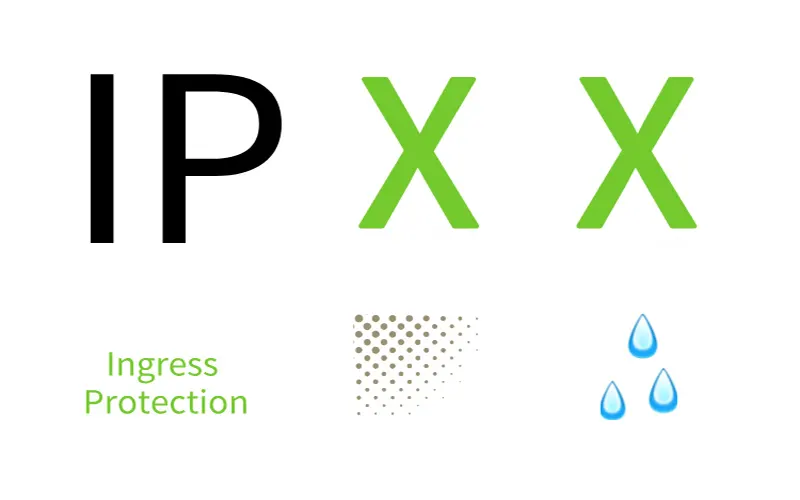
The Ingress Protection Rating is an internationally recognized standard used to assess the protection level of electronic devices (such as lighting fixtures) against solid foreign objects (such as dust) and liquids (such as water). It is established by the International Electrotechnical Commission (IEC) and is widely used in outdoor lighting, industrial equipment, smartphones, and other fields. An IP rating consists of the letters “IP” followed by two digits, for example: IP65.
The first digit represents the dust protection level, ranging from 0 to 6.
The second digit represents the water protection level, ranging from 0 to 9.
Higher numbers indicate stronger protection. For outdoor lighting equipment, a higher IP rating generally means better weather resistance and a longer lifespan.
How IP Ratings are Structured
An IP rating typically consists of two digits, in the format IPXX, where:
The first digit (0-6): Dust protection level
The second digit (0-9): Water protection level
Dust Protection Rating (First Digit)
| Number | Protection Level |
| 0 | No protection |
| 1 | Protection against objects ≥ 50mm (e.g., hands) |
| 2 | Protection against objects ≥ 12.5mm (e.g., fingers) |
| 3 | Protection against objects ≥ 2.5mm (e.g., tools) |
| 4 | Protection against objects ≥ 1mm (e.g., fine wires) |
| 5 | Dust protected (limited ingress, does not affect operation) |
| 6 | Completely dustproof (no dust ingress) |
Waterproof Rating (Second Digit)
| Number | Protection Level |
| 0 | No protection |
| 1 | Protection against vertically falling water drops |
| 2 | Protection against water drops falling at a 15° angle |
| 3 | Protection against spraying water (within 60°) |
| 4 | Protection against splashing water (from any direction) |
| 5 | Protection against low-pressure water jets (6.3mm nozzle) |
| 6 | Protection against powerful water jets (12.5mm nozzle) |
| 7 | Protection against temporary immersion (1m, 30 minutes) |
| 8 | Protection against continuous immersion (above 1m, specified by the manufacturer) |
| 9 | Protection against high-temperature and high-pressure water jets (suitable for cleaning equipment) |
Examples:
• IP44 = Protection against solid objects larger than 1mm + protection against splashing water
• IP65 = Complete dust protection + protection against low-pressure water jets
• IP68 = Complete dust protection + protection against prolonged immersion in water
What are the common IP Rating for Outdoor Lights?
In the field of outdoor lighting, understanding IP ratings for outdoor applications is essential when selecting the right luminaire. The most common IP ratings include IP44, IP54, IP65, IP66, IP67, and IP68. Each rating has its specific application scenarios and protection characteristics.
IP44 is an entry-level option within the IP Rating for the Outdoor Lighting category. It is suitable for semi-outdoor environments with some shelter, such as balconies, corridors, or covered patios. Although the protection level is limited, it is sufficient for areas not frequently exposed to harsh weather conditions.
IP54 improves dust resistance compared to IP44 while maintaining splash-proof protection. In terms of IP Rating for outdoor use, this level is suitable for general outdoor environments such as residential courtyard lights and community road lighting. It performs more reliably in dusty conditions than lower-rated options.
IP65 is currently the most widely used IP rating for outdoor lighting fixtures. It offers complete dust protection and resistance to water jets. Luminaires with this rating can withstand rain, wind, sand, and routine cleaning with pressurized water, making them ideal for street lighting, park landscapes, and commercial plazas.
IP66 further enhances waterproof performance beyond IP65, enabling the luminaire to withstand strong water jets. From an IP Rating for Outdoor perspective, this level is particularly suitable for locations that require frequent high-pressure cleaning, such as industrial parks, ports and docks, and car wash facilities.
IP67 provides short-term immersion protection, ensuring the luminaire remains sealed even if it is temporarily submerged. This IP rating for outdoor solutions is well suited for areas prone to water accumulation, including low-lying zones, poor drainage areas, or buried landscape lighting installations.
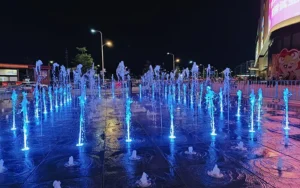
IP68 represents the highest IP rating for outdoor protection level, allowing long-term immersion and continuous operation underwater. Unlike IP67, which only supports short-term submersion, IP68 is designed to withstand greater water pressure and extended immersion periods. This rating is specifically intended for underwater applications such as pool lighting, fountain lights, water features, and swimming pool illumination. IP68-rated luminaires typically use advanced sealing technologies and specialized materials to ensure stable performance in long-term underwater environments.
What IP Rating for Outdoor Lights Need? Recommendations for Different Scenarios
Choosing the appropriate IP rating for outdoor lights requires considering the installation environment, usage conditions, and budget. Protection level requirements vary significantly depending on the application scenario.
For residential gardens and balconies, an IP44 or IP54 IP rating for outdoor lights is usually sufficient. These areas are relatively sheltered and not frequently exposed to harsh weather. IP44 protects against everyday water splashes, while IP54 offers improved dust resistance, making it suitable for dusty environments.
For commercial areas and public spaces, an IP65 IP rating for outdoor lights is recommended. These locations experience high foot traffic and more complex environmental conditions, requiring a higher protection level to ensure long-term, stable lighting performance. IP65 can handle rain, wind, and routine water pressure during cleaning and maintenance.
Industrial areas and harsh environments typically require an IP66 or higher IP rating for outdoor lights. Such locations often involve heavy dust, chemical exposure, or frequent high-pressure washing. IP66 provides strong waterproof protection, ensuring reliable operation under demanding conditions.
Coastal areas and high-humidity environments should opt for an IP67 IP rating for outdoor lights. Salt spray and persistent moisture significantly increase corrosion risk, making enhanced sealing essential. IP67’s temporary immersion protection offers added safety in these challenging environments.
In-ground installations and water feature lighting must use IP67 or IP68 IP ratings for outdoor lights. These fixtures are in direct contact with water and require the highest level of waterproof protection. IP68 supports long-term underwater operation, making it the preferred choice for submerged and underwater lighting applications.
The Relationship Between IP Rating and Product Lifespan and Safety
The IP rating is closely related to the lifespan of outdoor lighting fixtures. An appropriate IP rating not only extends product life but also significantly enhances safety.
From a lifespan perspective, higher IP-rated luminaires generally have better sealing performance, effectively preventing moisture and dust from entering the interior. Even a small amount of moisture penetration can lead to circuit board corrosion, short circuits, or accelerated component aging. Dust accumulation can affect heat dissipation, causing the LED chip to overheat and fail prematurely.
High IP-rated luminaires utilize better sealing materials and processes in their design and manufacturing, such as high-quality silicone sealing rings and precise joint surface treatment. These measures not only improve protection but also enhance the overall structural strength of the product. In practical use, IP65-rated luminaires typically have a 30-50% longer lifespan than IP44-rated products.
From a safety perspective, the IP rating directly relates to electrical safety. Moisture penetration can lead to leakage, short circuits, and even serious safety accidents such as fires. This is especially critical for lighting equipment used in public places, where safety requirements are higher. Choosing an appropriate IP rating is not only a guarantee of product performance but also a responsibility for user safety.
The Difference Between IP Ratings and Waterproof Certifications
Many people easily confuse IP ratings and waterproof certifications, but in reality, these are two different conceptual systems, each with its own specific application areas and evaluation criteria.
IP rating is a comprehensive protection rating system that includes not only waterproof performance but also dustproof capabilities. It evaluates the overall protective performance of a product through standardized testing procedures.
Waterproof certification, on the other hand, focuses more specifically on the waterproof performance of a product, usually employing different testing methods and evaluation criteria. For example, Japan’s JIS waterproof standard and the American NEMA standard each have their own waterproof rating classifications and testing methods. These standards may be stricter or more detailed than the IP standard in some aspects.
In practical applications, IP ratings are widely used due to their international universality, especially in the outdoor lighting industry. Most international brands indicate IP ratings to facilitate comparison and selection for users. Waterproof certifications, however, are more commonly used in specific industries or regions.
Is a higher IP rating always better?
While many people tend to choose the highest IP rating (such as IP68), it’s not necessary in all situations:
- Increased cost: IP68 luminaires have higher manufacturing costs and are therefore more expensive.
- Increased installation complexity: Some high-protection luminaires require seals, silicone, or professional installation methods.
- Unnecessary performance overkill: For example, using an IP68 rating for a wall light installed under a balcony won’t provide any practical advantage and will only waste budget.
Therefore, choosing the “just right” IP rating is more rational. True wisdom lies in precisely matching the IP rating to the specific application requirements.
Conclusion
Through the detailed analysis in this article, we can see the importance of IP ratings in the selection of outdoor lighting fixtures. Correctly understanding and applying IP ratings ensures the long-term stable operation of the lighting fixtures. When purchasing, prioritize products with official IP rating labels and make a rational judgment based on your specific environment.
Still struggling to choose the right outdoor light? Browse our high-protection outdoor lighting series, ranging from IP44 to IP68 – safe, durable, and quality guaranteed!
If you have any further questions about IP ratings for lighting fixtures, please leave a message or consult our team of lighting experts!
FAQs
Are lights with a higher IP rating more durable?
Not necessarily. A high IP rating only indicates strong dust and water resistance, but the lifespan of a light fixture is also affected by materials, heat dissipation, and circuit design. If heat dissipation is poor, even an IP68-rated light may experience faster lumen depreciation due to high temperatures.
Are lights with higher IP ratings more expensive?
Usually, yes. IP65 is more expensive than IP44, and IP68 is even more expensive.
Is IP68 the best IP rating?
IP68 is one of the highest ratings, indicating that the device can operate underwater for extended periods. However, not all outdoor lighting requires such a high level of protection. Unless it’s for underwater lighting, IP65 to IP67 is usually sufficient.
Can light fixtures without an IP rating be used outdoors?
It is not recommended. Light fixtures without a clearly indicated IP rating may not have basic waterproofing capabilities and are prone to water ingress, short circuits, or damage in outdoor environments.