With the continuous development of architectural lighting, landscape lighting, and urban nightscape projects, DMX outdoor lighting has become one of the most common control methods in high-end outdoor lighting projects. Whether it’s for commercial complex facades, bridge lighting, or cultural tourism landscape projects, the DMX512 control system is widely adopted due to its powerful dynamic effects and precise control capabilities.
For contractors, lighting designers, and procurement personnel, understanding the working principles, system components, advantages, and limitations of DMX512 is crucial for correct selection and successful project implementation. This guide will start from basic concepts and systematically explain the core knowledge of DMX outdoor lighting, helping clients plan and implement outdoor lighting projects more efficiently.
Table of Contents
What is DMX Outdoor Lighting?
DMX outdoor lighting refers to lighting systems that apply the DMX512 digital communication protocol to outdoor environments such as building facades, landscapes, bridges, and parks.
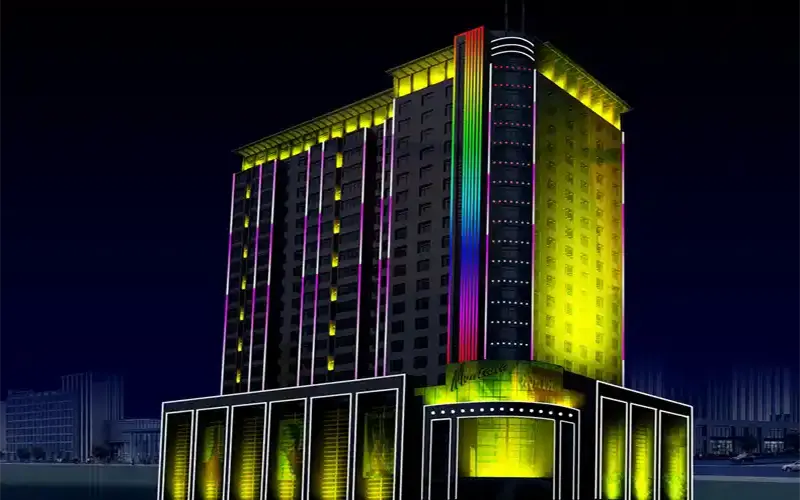
DMX (Digital Multiplex) is essentially a high-speed, serial, unidirectional data transmission standard that allows a master controller to send precise instructions to hundreds of light fixtures. When applied outdoors, all light fixtures in the system (DMX fixtures) must be highly weather-resistant, meaning they have a high IP protection rating (usually IP65 or higher), and are able to reliably receive and execute DMX signals.
For lighting projects with a large number of fixtures and complex control requirements, DMX outdoor lighting offers greater flexibility and visual impact.
What is DMX512? How does DMX512 work?
DMX512 is a digital communication protocol originally used for stage lighting, and later widely adopted in architectural and outdoor lighting. “512” represents the maximum number of channels that can be controlled by each DMX signal line.
The basic working principle of DMX512 includes:
- The controller sends data via the DMX signal line.
- Each light fixture or decoder is assigned an address.
- Different channels correspond to brightness, color, or effect parameters.
- The signal is unidirectional, stable, and has a fast response speed.
Because of this structure, DMX512 is particularly suitable for outdoor lighting systems that require synchronized control, multi-light linkage, and dynamic effects.
Core Components of a DMX Outdoor Lighting System
A complete DMX outdoor lighting system typically consists of the following core components:
Controller: The brain of the system, used for programming and sending DMX signals. This can be a professional lighting console, a computer with control software, or a simple programming player.
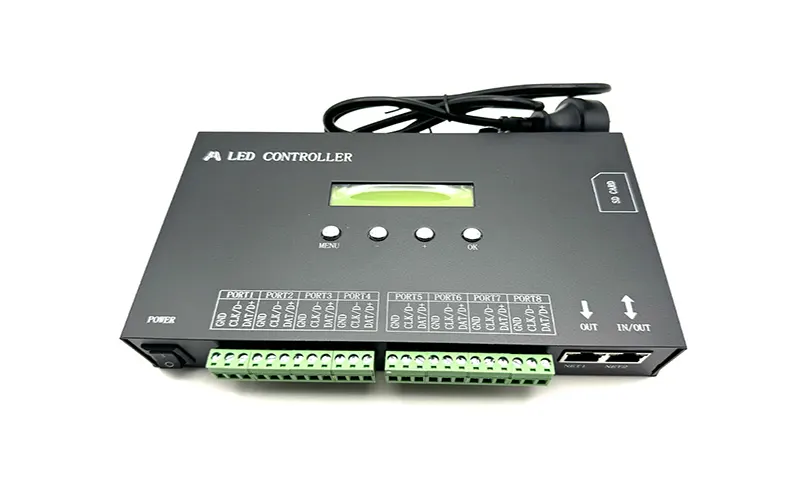
Dimmer/Decoder: For non-intelligent conventional luminaires, a dimmer is needed to convert the DMX signal into a brightness control signal. For intelligent LED luminaires, their built-in “decoder” directly interprets the DMX signal to control the internal chip.

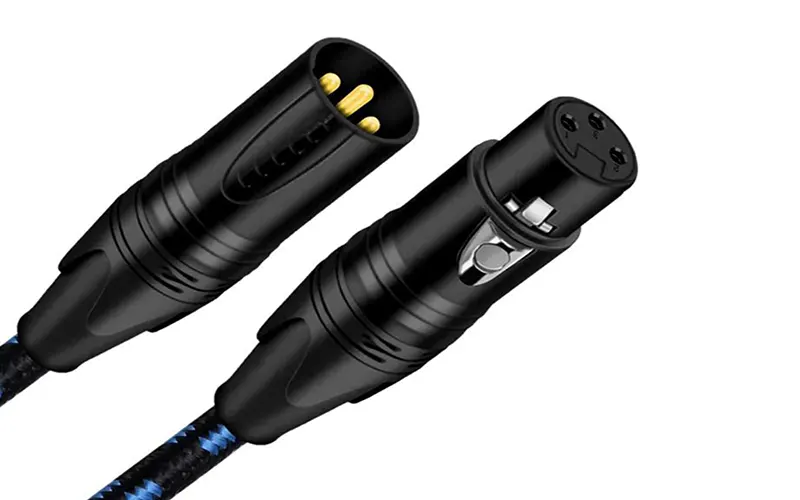
Signal Cables: Typically shielded twisted-pair cables are used, and in outdoor environments, they must be waterproof, UV-resistant, and corrosion-resistant. For long distances or complex environments, optical isolators are needed to prevent signal feedback, and signal amplifiers are used to relay the signal.
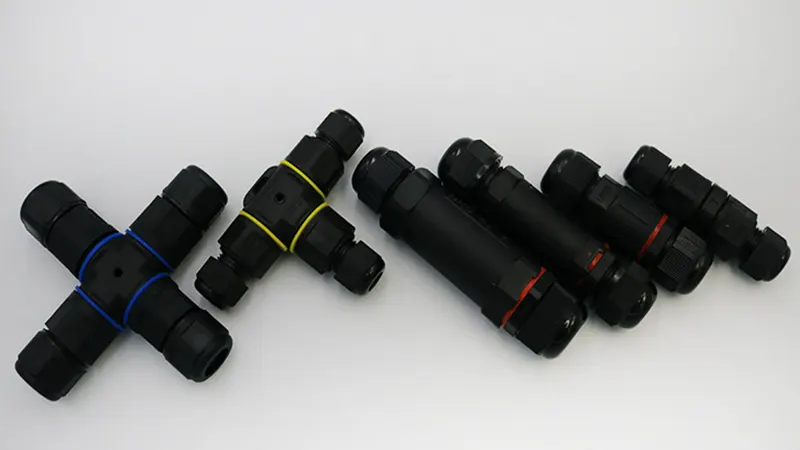
Waterproof Connectors: Ensuring reliability for long-term outdoor operation.
Controlled Luminaires: LED wall washers, floodlights, point lights, linear lights, etc., that support the DMX protocol.
Power Supply and Distribution System: Provides stable power to the controller and luminaires; outdoor installations require consideration of waterproofing and lightning protection.
DMX Outdoor Lighting Compared to Other Control Methods
Depending on the project scale, control requirements, and budget, other control methods such as DALI, SPI pixel control, and 0-10V dimming are also commonly used in lighting projects. Understanding the differences between these methods and DMX outdoor lighting can help in making more informed technical decisions at the early stages of a project.
DMX vs DALI
DALI (Digital Addressable Lighting Interface) is a bidirectional digital control protocol commonly used in commercial and indoor lighting systems. In outdoor lighting applications, DALI is more suitable for basic on/off control, group dimming, and individual lamp management.
In contrast, DMX excels in real-time control and dynamic effects. DMX512 can simultaneously control the brightness, color, and timing of a large number of luminaires, making it ideal for projects requiring dynamic scene changes, such as building facades, landscape lighting, and urban nightscapes.
In short:
- If the project focuses on functional lighting and energy management, DALI is more advantageous.
- If the project emphasizes visual effects, dynamic changes, and lighting performance, DMX outdoor lighting is the more ideal choice.
DMX vs SPI Pixel Control
SPI control is commonly used for addressable LED strips and point sources, offering pixel-level control and the ability to independently control individual LEDs. In some decorative projects, SPI can achieve very fine-grained dynamic effects.
However, in outdoor engineering applications, SPI systems typically have the following limitations:
- Complex wiring and high demands on signal integrity
- Shorter transmission distance, unsuitable for large-scale projects
- Relatively limited scalability and system stability
In contrast, DMX512 offers advantages in long-distance transmission, system stability, and engineering standardization, making it more suitable for large-scale, long-term outdoor lighting projects. Therefore, in projects prioritizing engineering reliability and ease of maintenance, DMX outdoor lighting is often the more common choice.
DMX vs 0–10V Dimming
0–10V dimming is a traditional analog control method, widely used in basic lighting systems due to its simple structure and low cost. It is primarily used for adjusting the brightness of luminaires but cannot control color changes or complex dynamic effects. Compared to 0-10V control, DMX offers the following advantages:
- Higher control precision
- Supports multi-channel fixtures such as RGB/RGBW
- Enables multi-scene and lighting synchronization effects
However, for outdoor projects with a small number of fixtures and only requiring simple brightness adjustment, 0-10V remains an economical and practical option; while in medium to large-scale lighting projects, DMX outdoor lighting is better suited to meet overall visual design requirements.
Advantages of DMX Outdoor Lighting
DMX outdoor lighting is widely used in architectural lighting and landscape projects primarily due to its comprehensive advantages in control precision, system flexibility, and engineering reliability.
Precise Brightness and Color Control
DMX512 uses digital signal transmission, with each channel corresponding to specific control parameters, allowing for extremely high precision in brightness adjustment and color changes. For multi-channel outdoor luminaires such as RGB and RGBW, DMX enables smooth gradient effects and consistent color performance, making it particularly suitable for building facades and landmark projects that demand high-quality lighting.
Supports Complex Dynamic Effects and Multi-Scene Switching
DMX outdoor lighting can easily achieve various dynamic lighting effects such as running, fading, flashing, and (interlocking), and can quickly switch between different lighting scenes through preset programs.
Strong Scalability, Suitable for Large-Scale Engineering Projects
The DMX512 control system has excellent scalability. By adding controllers or signal distribution devices, it can manage hundreds or thousands of outdoor luminaires. This feature makes DMX an ideal choice for medium to large-scale outdoor lighting projects, meeting the needs of phased project implementation or future expansion.
Wide Compatibility with Luminaires and Equipment
As an internationally recognized control protocol, DMX512 is supported by a large number of luminaire manufacturers and control equipment vendors worldwide. Whether it’s wall washers, linear lights, floodlights, point sources, or landscape lights, most professional outdoor luminaires are directly compatible with DMX control systems. This high degree of compatibility effectively reduces supply chain risks.
Industry Standardization
DMX512 has been used in the lighting industry for many years, with mature technology and stable standards. For contractors and project owners, this means the system is not dependent on a single brand, making maintenance, replacement, or upgrades more flexible, and ensuring the long-term stable operation of the outdoor lighting system.
Disadvantages of DMX Outdoor Lighting
DMX outdoor lighting also has some limitations that need to be evaluated in advance. Understanding these factors will help in making more reasonable technical choices during the project planning phase.
Relatively Complex System Design
The DMX512 system involves multiple technical aspects, including address assignment, channel planning, zone control, and signal topology design. For outdoor projects with a large number of fixtures or complex control logic, a lack of professional lighting design and system planning can easily lead to control confusion or limited expansion capabilities later on.
Relatively High Wiring and Debugging Costs
Compared to simpler control methods such as 0-10V, DMX outdoor lighting typically requires dedicated signal cables and signal distribution equipment. In outdoor environments, waterproofing, lightning protection, and anti-interference measures also need to be considered, which increases initial construction and material costs.
Requires Professional Programming and Debugging Support
The dynamic effects, scene switching, and linkage logic of DMX systems usually rely on professional software for programming and debugging. For construction teams without relevant experience, the learning curve is steep, and professional technical personnel or supplier support may be needed in the initial stages of the project.
Fault Diagnosis and Maintenance are Relatively Specialized
During system operation, if signal anomalies, fixture malfunctions, or inconsistent effects occur, technicians with knowledge of the DMX protocol and system structure are often required for troubleshooting. This may increase the technical threshold for ongoing maintenance for some project owners.
How to Choose a DMX Controller?
Choosing the right DMX controller is crucial for ensuring the smooth implementation of your project and providing room for future expansion and upgrades.
Choosing Control Capacity Based on Project Scale and Number of Fixtures
First, you need to determine the total number of fixtures in your project and the number of control channels required for each fixture. Small outdoor projects may only require a single DMX Universe, while medium to large-scale architectural lighting projects often require multiple Universes, or even a networked control architecture. Whether the controller supports multiple Universe outputs is a key indicator of its suitability for large projects.
Do You Need Multi-Scene Management or Automated Control
For commercial complexes, cultural and tourism projects, or urban nightscape lighting, multi-scene switching and timed control are common requirements. For such projects, prioritize DMX controllers that support scene presets, time control, and remote management functions to improve system flexibility and management efficiency.
Number of Control Channels and System Expandability
As the project progresses, the number of fixtures and control requirements may increase. Therefore, the controller’s expandability is very important. For example, whether it supports system expansion through software upgrades, network expansion, or adding sub-controllers will directly affect the ease of adding future phases to the project.
Compatibility with Existing Systems
In practical engineering projects, DMX controllers often need to work in conjunction with other control systems, such as building management systems (BMS), intelligent lighting platforms, or third-party automation systems. Choosing a controller that supports common communication protocols or has open interfaces will help achieve system integration and avoid future modification costs.
Conclusion
Overall, DMX outdoor lighting, with its powerful control capabilities and mature technology system, has become an important solution in the field of architectural and landscape lighting. DMX512 is particularly suitable for outdoor projects that prioritize visual effects, system scalability, and long-term reliability.
If you are planning or procuring a DMX outdoor lighting system, it is recommended to communicate with a professional supplier or technical team early in the project to ensure that the control scheme, lighting fixture selection, and construction design are perfectly matched.
Please contact us to obtain DMX outdoor lighting solutions and product support tailored to your project.
FAQs
Is a DMX system suitable for residential or small projects?
For minimalist, static small residential projects, DMX might be overly complex and expensive. 0-10V, DALI, or high-quality smart WiFi/Zigbee systems might be more suitable. However, if your small project requires complex color changes, dynamic scenes, or you plan for future expansion, DMX remains a professional and reliable option.
Is DMX outdoor lighting suitable for long-term outdoor use?
Yes, DMX outdoor lighting is very suitable for long-term outdoor applications, provided the system is designed and the products are selected correctly. The key is to choose luminaires, decoders, and connectors with a high protection rating (usually IP65 and above), and to implement proper lightning protection and grounding designs to ensure the system operates stably in complex outdoor environments.
What is the maximum control distance of DMX512 in outdoor environments?
The standard DMX512 signal has a transmission distance of approximately 300 meters under ideal conditions. In practical outdoor projects, if longer transmission distances are required, DMX signal amplifiers or repeaters are typically used to extend the control distance, thus meeting the needs of large-scale building or municipal lighting projects.
Does DMX outdoor lighting require professional programming?
In most cases, yes. Scene switching, dynamic effects, and lighting synchronization in DMX systems typically rely on professional software for programming. However, for some basic applications, the complexity can be reduced through preset programs or simplified controllers. For large projects, it is generally recommended to have technical support from a professional team or supplier.
Which is better for architectural lighting: DMX outdoor lighting or DALI?
If the project focuses on dynamic effects, color changes, and visual impact, DMX512 is the more suitable choice; if the focus is on basic dimming, energy management, and individual lamp control, DALI has the advantage. In architectural lighting and landscape engineering, DMX outdoor lighting is more widely used.