Outdoor tree lighting plays a crucial role in transforming any outdoor space into a visually appealing and functional environment. Whether for residential gardens or commercial landscapes, proper lighting enhances aesthetics, improves safety, and extends usability at night.
Table of Contents
What Is Outdoor Tree Lighting and Why Is It Important?
Outdoor tree lighting refers to the strategic placement of artificial light sources to illuminate trees within a landscape design. It involves using specific techniques to accentuate the form, foliage, bark texture, and shadow play of individual trees or groups of trees.
The importance of this practice extends beyond mere aesthetics. Firstly, it enhances safety and security. Illuminate tripping hazards near roots or uneven terrain. Secondly, it extends the usability of your outdoor living spaces, allowing you to enjoy your patio or garden late into the evening.
Types of Outdoor Tree Lighting Fixtures
Selecting the right hardware is the foundation of a successful lighting plan. Different tree structures and design goals require different types of fixtures:
- Well Lights (In-Ground): These are installed flush with the ground, making them invisible during the day. They are perfect for uplighting tall trunks without cluttering the lawn with visible equipment.
- Spotlights: These emit a narrow beam (typically 15-25 degrees) and are ideal for highlighting tall, slender trees like cypress or palm trees, focusing attention on the canopy.
- Floodlights: With a wider beam spread (40+ degrees), these are best for large, spreading trees like oaks or maples where you want to illuminate the entire canopy evenly.
- Bullet Lights: Small, cylindrical fixtures that are versatile and easy to hide among shrubs or at the base of smaller trees.
- String Lights: While less focused, draping string lights through the branches of ornamental trees creates a whimsical, festive atmosphere suitable for entertaining areas.
How to Choose the Right Outdoor Tree Lighting
Choosing the right lighting requires both technical and design considerations.
- Tree size and shape determine fixture quantity
- Brightness (lumens) affects visual comfort
- Beam angle controls lighting coverage
- Color temperature sets the mood (2700K–3000K recommended)
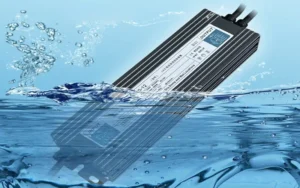
- Look for a minimum rating of IP65 or IP67. This ensures your fixtures survive rain, snow, and sprinkler systems.
Low Voltage Systems vs. Solar Tree Lights
One of the biggest decisions homeowners face is choosing a power source. Both options have distinct advantages depending on your budget and installation capabilities.
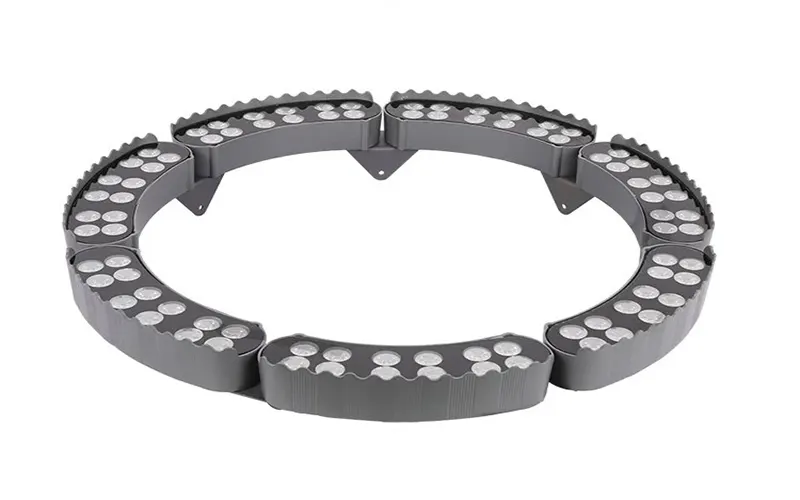
Low Voltage Systems (12V/24V) are the industry standard for professional results.
Pros: Consistent brightness regardless of weather, longer lifespan, dimmable options, and the ability to run many lights on one circuit.
Cons: Requires trenching for wires and professional installation or significant DIY effort.
Solar Tree Lights have improved significantly in recent years but still have limitations.
Pros: Zero wiring, easy installation (just stake them in), and no electricity costs.
Cons: Brightness fluctuates based on sun exposure; batteries degrade over time, leading to dimmer light in winter or after cloudy days. They are best suited for accent lighting rather than primary illumination.
For a permanent, high-quality outdoor tree lighting setup, low voltage LED systems are generally recommended.
Outdoor Tree Lighting Design Tips and Ideas
Once you have your fixtures, the art lies in the placement. Here are three proven techniques to elevate your design:
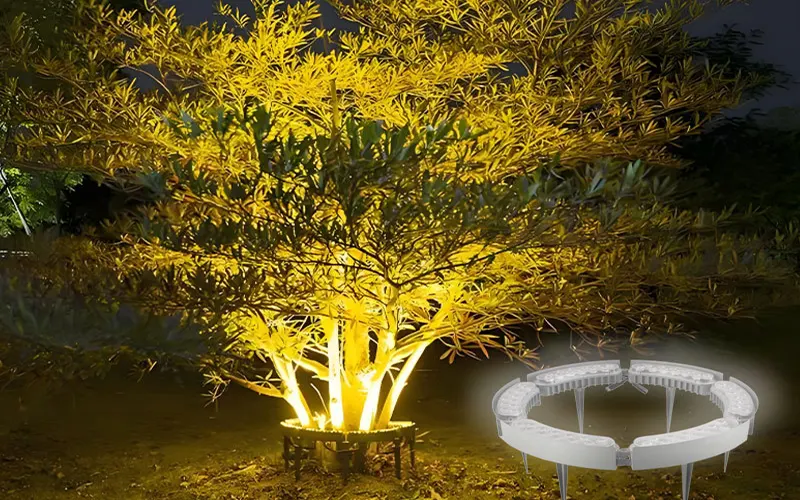
- Uplighting: Place the fixture at the base of the tree, aiming upward. This dramatises the trunk and canopy, making the tree appear larger and more majestic. It works best on trees with interesting bark or strong branch structures.
- Moonlighting (Downlighting): Mount the fixture high in the branches, aiming down. This mimics natural moonlight, casting soft, dappled shadows on the ground below. It is excellent for creating ambient light under large shade trees.
- Grazing: Position the light very close (less than a foot) to the trunk and aim it straight up. This highlights the rough texture of bark on trees like oaks or pines, creating deep shadows that emphasise depth.
Pro Tip: Always view your lighting from inside the house at night. The goal is to see the tree, not the light fixture. If you see the bulb, adjust the angle or add shielding.
Common Mistakes to Avoid in Tree Lighting
Even with expensive fixtures, these errors can ruin the effect:
The “Landing Strip” Effect: Placing lights in a straight line looks unnatural.
Glare: If you see the bulb, it’s a mistake. Use glare guards to hide the source.
Over-lighting: Not every tree needs a light. Create depth by choosing focal points.
Professional vs. DIY: Which Path Should You Take?
For a few small trees, a DIY kit is a great weekend project. However, for large-scale landscapes, a pro is safer. Professionals understand voltage drop (ensuring all lights are equally bright) and how to protect tree roots during installation.
Conclusion
Transforming your garden with outdoor tree lighting is one of the most impactful upgrades you can make to your home or project.
Whether you choose a reliable low-voltage system or the convenience of solar lighting, the key lies in thoughtful planning and design. Start small by illuminating your favorite tree, observe the effect at night, and gradually expand your lighting layout for the best results.
You can get a quote through our online customer service or view our professional range of outdoor lighting products.
FAQs
Can I install tree lighting myself, or do I need a professional?
If you choose solar lights, installation is very easy and requires no electrical knowledge—simply stake them into the ground. For low-voltage systems, a handy DIYer can install them by following safety guidelines for trenching and connecting transformers.
How many lights do I need per tree?
For small ornamental trees, one well-placed spotlight is usually enough. For medium to large canopy trees (like Oaks), we recommend 2 to 3 lights from different angles to eliminate harsh shadows and create a 3D effect.
Can landscape lights damage tree growth?
No, as long as they are installed correctly. Use stainless steel screws for mounted lights to prevent rust, and always leave extra wire (slack) at the base so the tree has room to expand without choking.
How far should the light be from the tree trunk?
For a standard Uplighting effect, place the fixture 1 to 3 feet away from the trunk. If you want to highlight the canopy specifically, move the light further back and increase the beam angle.
How do I prevent outdoor lights from getting damaged?
Choose fixtures with high waterproof ratings (such as IP65 or above), use proper installation methods, and perform regular maintenance to ensure long-term durability.